
Pokój: Discover Historic Parks and Culture
Accommodation in Pokój
Pokój brings together a richly varied historic park landscape with distinctive stories of music and architecture. When planning your trip, the town offers several points of interest: its gardens, the Church of Duchess Sophie and the annual Weaver Festival. You can consider which of these themes you would like to shape your stay when choosing a destination and accommodation.
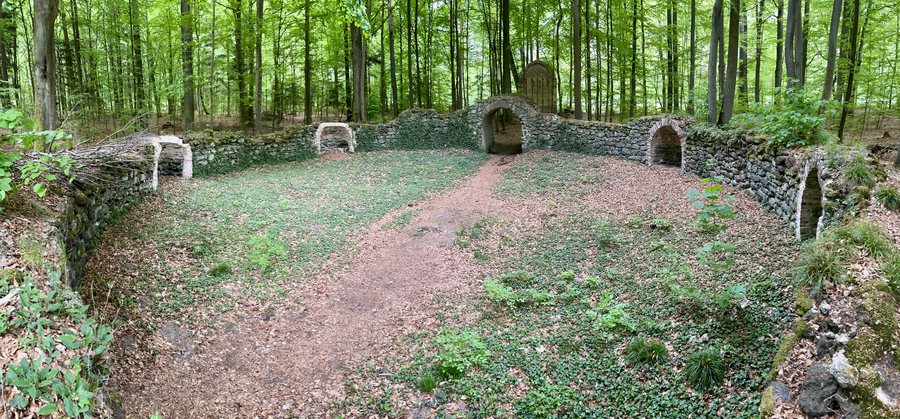 Ruiny Elizjum w parku przypałacowym, Pokój, woj. opolskie
Photo: Olgierd Rudak via Wikimedia Commons, CC BY-SA 4.0
Ruiny Elizjum w parku przypałacowym, Pokój, woj. opolskie
Photo: Olgierd Rudak via Wikimedia Commons, CC BY-SA 4.0
Three park areas, each with its own character
The historic park ensemble in Pokój comprises a French garden in the Baroque style, a 19th-century landscape park and the English Park on Winna Góra. Their different designs reflect different ideas of what a garden should be: the Baroque garden, landscape park and English park form part of a single ensemble, but are clearly distinct components.
The English Park had a romantic, sentimental character and numerous elements of park architecture. These include ruins, obelisks, castles, temples, busts, pavilions and garden summerhouses. Work on the park began in 1780 under Websky and was overseen by the gardener Klober. The park's architecture as it is described today can thus also be linked to its history.
The French garden includes a tea pavilion on an island surrounded by water. The historic park also features a large rhododendron with its own information board, as well as fishponds surrounded by dense vegetation. These details complement the park's architectural features with botanical and landscape elements. Visitors with a particular interest in gardens will find several different perspectives on the subject in Pokój, rather than just a single type of park.
Church, library and musical history
The Church of Duchess Sophie stands out for its elliptical floor plan, laid out along an east–west axis. Inside are historic 18th-century organs and richly decorated altars. A library containing the ducal book collection, which survived a castle fire, is located above the sacristy. The floor plan, organs, altars and library each offer a distinctive feature and give the church a connection between architecture and cultural heritage passed down through the generations.
Carl Maria von Weber is also connected to Pokój's history: he stayed there in 1806–1807 under the patronage of Prince Heinrich Friedrich Eugen, Pokój's second owner. This local link to musical history provides a fitting connection to the Weaver Festival, held annually in Pokój to celebrate music in parks and gardens. The event thus brings together two of the town's defining themes, while the histories of the parks and music remain distinct.
You can plan your stay around the event dates without assuming that the programme is the same every year.
Further historical connections
A headless monument to Frederick the Great can be found nearby. It adds another historical point of interest to the stories of the parks and church. Pokój may be an especially interesting choice among different destinations if you would like to explore park design, architecture and musical history together. The park areas offer a range of themes, while the church and the connection to Weber provide their own cultural focus.
This gives you a clear picture of Pokój and its themes when choosing the town as your destination. You can then look for hotels in Pokój to suit your planned stay.
Discover more destinations
Back to the main travel overview: Namysłów.

