
Discover Kujau: Church, Art and Local History
Accommodation in Kujau
The church, palace and archaeological sites offer glimpses into different periods of Kujau’s history. This is especially clear in the building history of the Trinity Church and the different periods represented by the settlement remains. Religious art, the gate-bell house and four roadside shrines each add a further dimension.
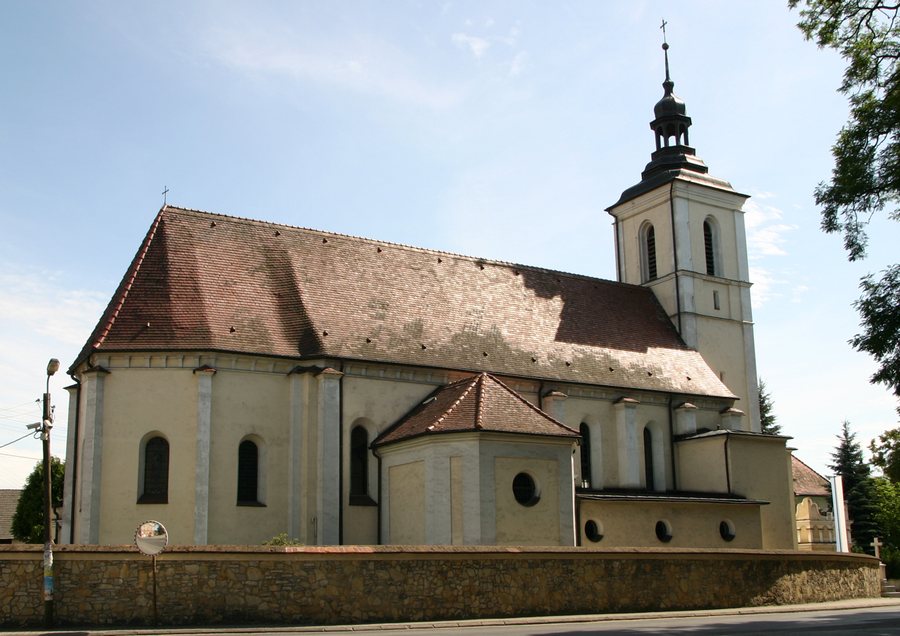
The Trinity Church and its furnishings
The first references to a wooden church in Kujau date from 1447. The present-day masonry Trinity Church was endowed in 1583 by Kujau’s Protestant owners, Baltazar Pückler von Groditz and his wife Poliksena. Thus, the earlier reference to the wooden church and the later endowment of the masonry place of worship stand as two distinct historical points of reference. The dates are 136 years apart.
The church features late Renaissance polychrome decoration from the 16th century. Polychromy refers to multicoloured painted ornamentation. The motifs described include two angels blowing trumpets and bearing the Arma Christi, the instruments of Christ’s Passion. The decoration thus brings together a clearly defined art-historical period and specific religious imagery. For travellers interested in art, the Trinity Church offers a particular way to explore its interior, in addition to its architectural history.
The palace, gate-bell house and roadside shrines
The palace in Kujau was built after 1900. It was later extended in the Neoclassical style, and its north wing was added in 1909. Its construction after 1900 and the specific date of the north wing mark different stages in its building history. Neoclassical refers to a style inspired by ancient forms; here, it is specified for the palace’s later extension.
The gate-bell house is also part of the village’s historic architecture. It is listed in the monument register of the Opole Voivodeship under number 559/59, with 24 February 1959 given as the date of entry. The park in Kujau is also listed: under number 257/90, with an entry date of 27 June 1990. Four roadside shrines or wayside crosses add to Kujau’s religious character. These buildings, registered sites and small places of worship represent different kinds of cultural heritage.
Archaeological traces and their periods
The archaeological finds include two settlement sites with different dates. One settlement site in AZP area 94-35, find-spot number 10/3, dates from the earlier phase of the Early Middle Ages and is listed in the monument register. Another site in AZP area 94-36, number 13/21, includes settlement remains from the 9th to 10th centuries and from the 14th century. The second entry therefore gives two periods, while the first is dated to the earlier phase of the Early Middle Ages. This adds another perspective to the building history of the church and palace: the sites relate to settlement remains, not individual buildings.
Cycling route through Kujau
Cycling is another option to consider when planning a trip. A description published in 2020 mentions a signposted cycle route through Kujau as part of a 45-kilometre route through the municipality of Strzeleczki and neighbouring municipalities. The 45 kilometres refer to the entire route, not just the section in Kujau. If you include this route in your plans, check its current course before setting out.
Discover more destinations: Oleszka, Gogolin, Krapkowice, Zdzieszowice, Zellin, Zabierzów, Rogów Opolski, Moschen.
Back to the main travel overview: Krapkowice.

