
Pilszcz: Cycling Route and Memories of 1683
Accommodation in Pilszcz
When choosing a destination, it often helps to have specific themes to guide your travel planning. Pilszcz offers several points of interest: a cycling route with a defined course and historical connections ranging from the relief of Vienna to the Bronze Age. This allows you to consider whether you would prefer to plan your trip around a route or the history of the village.
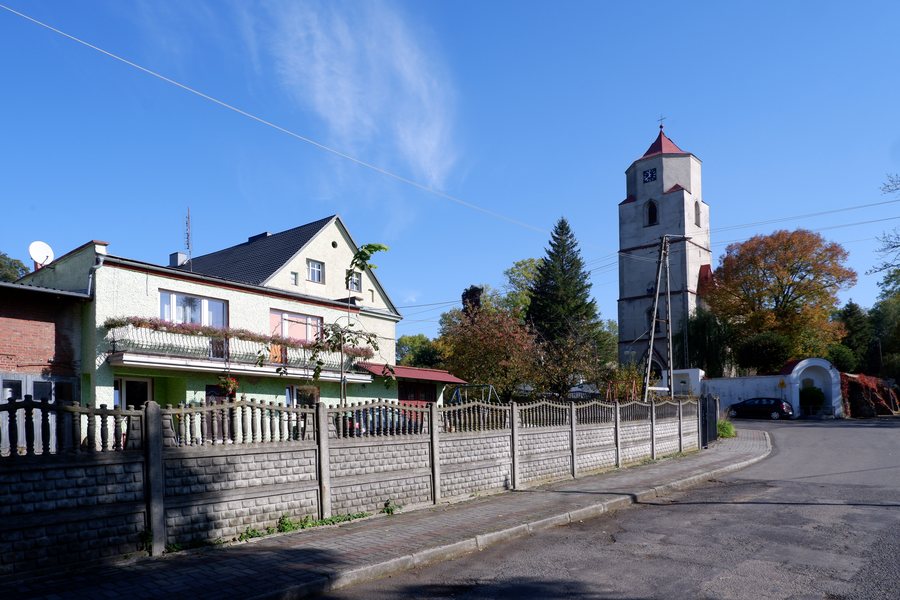 File:Pilszcz, aleja Schumana 2 i kościół.jpg
Photo: Kamil Czaiński via Wikimedia Commons, CC BY-SA 4.0
File:Pilszcz, aleja Schumana 2 i kościół.jpg
Photo: Kamil Czaiński via Wikimedia Commons, CC BY-SA 4.0
A cycling route passing through Pilszcz
The “Opava – Pilszcz – Kietrz” cycling route runs from the Czech border through Pilszcz, Ludmierzyce, Lubotyń and Dzierżysław, as well as through the “Góra Gipsowa” nature reserve, to Kietrz. The sequence of places helps you locate Pilszcz along the route: the village lies between the border and the endpoint, Kietrz. If you include the cycling route in your plans, you have several named stops to help you find your way.
The cycling route is established; check current route conditions locally. Its course provides a concrete starting point for travel planning, without requiring a single attraction to be the main focus. First, consider whether you would like to make a route passing through several named places the focus of your trip.
Memories of the relief of Vienna
Pilszcz lies on the historic march route of King Jan III Sobieski’s army, which went to Vienna in 1683 to provide relief. The Church of Our Lady in Pilszcz houses a painting commemorating the relief of Vienna in 1683. Both connections relate to the same event but emphasize different aspects: one concerns the army’s route, while the other is a painting in the church.
For those interested in history, this connection offers a way to discover Pilszcz through its association with a specific historical event. The army’s route and the painting are two separate reminders of 1683. When planning your trip, you can therefore decide whether you are mainly interested in the historic march or the visual commemoration in the church.
A Bronze Age find
Another historical connection is the so-called Pilszcz hoard. It was discovered near the village in 1884, dates from the Bronze Age and consisted of neck rings and bracelets. The name of the hoard should not be confused with the findspot: it was discovered near the village.
The dates also tell different stories: 1884 is the year of discovery, while the hoard itself is dated to the Bronze Age. This find therefore offers a different perspective in time from the events of 1683. Its listed components—neck rings and bracelets—make the find more tangible without equating it with the army’s route or the painting.
Which focus suits your trip?
The cycling route provides a geographical framework spanning several named places; the historical connections draw attention to different periods and forms of commemoration. If you mainly want to include a cycling route in your travel plans, its course is a suitable starting point. If you are more interested in history, the march of 1683, the painting in the church and the Bronze Age find discovered near the village offer different points of interest.
When looking for a hotel in Pilszcz, you can first decide whether the cycling route or the historical connections will be the deciding factor in choosing your destination.
Discover more destinations: Debrzyca, Głubczyce, Kietrz.
Return to the main travel overview: Głubczyce.

