
Debrzyca – Churches, Crosses and Historic Routes
Accommodation in Debrzyca
Explore Debrzyca through its churches, chapels and crosses, as well as several routes that pass through the village or lead to it. Its historic traces date from the 16th/17th century to the early 20th century, and include distinctive details such as a stone cross from 1903 and well-preserved cobblestone paving. These varied themes offer a practical starting point for planning your trip: you can compare cultural history and routes according to your interests and how much time you have.
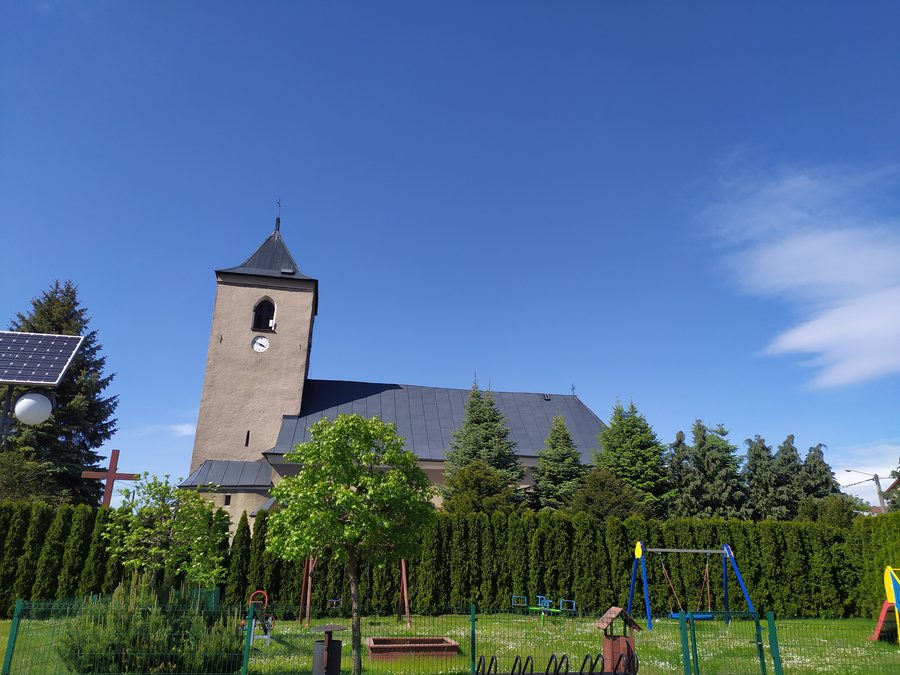 File:Kościół powołania św. Jakuba .jpg
Photo: DominikSkibinski02 via Wikimedia Commons, CC BY-SA 4.0
File:Kościół powołania św. Jakuba .jpg
Photo: DominikSkibinski02 via Wikimedia Commons, CC BY-SA 4.0
Church, Chapels and Crosses in Debrzyca
The parish church of St James in Debrzyca is listed in the voivodeship register of monuments. It dates from the 16th/17th to the 18th century. A cross from 1883 stands within the church wall. The church and cross bring together two distinct historical points of reference at a named location.
Several chapels and crosses are also associated with specific locations and dates. Next to Kościelna 25a is a chapel from the late 19th century, and next to Kościuszki 43 is a chapel from the early 20th century. The chapel next to Zielona 2 dates from around 1880. Opposite Kościuszki 7 is a stone cross from 1903. The different dates give an overview of the periods from which these surviving religious landmarks originate. Kaplica Lurdzka is also one of the monuments in Debrzyca.
Near the village, beside a field path, stands an imposing, twin-towered chapel, described as exceptional in the region. As a nearby attraction, it is a separate point of interest alongside the chapels and crosses within Debrzyca. Another distinctive feature of the village’s urban landscape is the well-preserved cobblestone paving on one of its streets.
Routes with Different Themes
Debrzyca lies on the Szlak Joannitów, a 92 km, one-day excursion route following the historic traces of the Order of Saint John. Another option is the black cycling route: from Lisięcice, it reaches Debrzyca after 4.5 km. The 30 km “Śladami naszych zabytków” route also passes through the village; it is rated as being of medium difficulty. When choosing, you can compare the different details: the historical focus and total length of the route of the Order of Saint John, the cycling route distance from Lisięcice, and the length and difficulty level of the “Śladami naszych zabytków” route.
Further Perspectives in the Głubczyce Destination
The wider Głubczyce destination offers additional cultural, historical and landscape themes in their own right. Głubczyce Town Hall was built in 1570 on the site of a 14th-century merchant’s house, using parts of the earlier building. After being destroyed in the Second World War, it was rebuilt in 2006–2008. The Franciscan church and monastery complex in Głubczyce was built between 1753 and 1770 to a design by Jan Innocenty Töpper of Prudnik. It comprises a Baroque church and a four-winged monastery arranged in a square around a courtyard. These buildings form a distinct historical focus within Głubczyce and should not be conflated with the monuments in Debrzyca.
The protected Mokre–Lewice landscape area offers a different perspective on the wider destination. It covers 6,527 ha, includes part of the Opawskie Mountains, and features gorges as well as the river valleys of the Troja, Osobłoga and Opawica. Rare and protected plants occur there, along with refuges for protected animals. When choosing what interests you, you can therefore distinguish between Debrzyca’s individual historic features and the separate landscape and cultural themes of the Głubczyce destination.
More Destinations
Back to the main travel overview: Głubczyce.

