
Sienno: Church History, Kopiec and Market Square
Accommodation in Sienno
Sienno brings together several distinct historical connections: the 15th-century Gothic Revival Church of St. Sigismund, an 18th-century Baroque bell tower, Kopiec in the eastern part of town, and the renovated market square. Together, they offer different ways to get to know Sienno through architectural history, local history and a renovated square. If you are looking for a specific place with several historical themes for your trip to Poland, these distinctions may influence your choice.
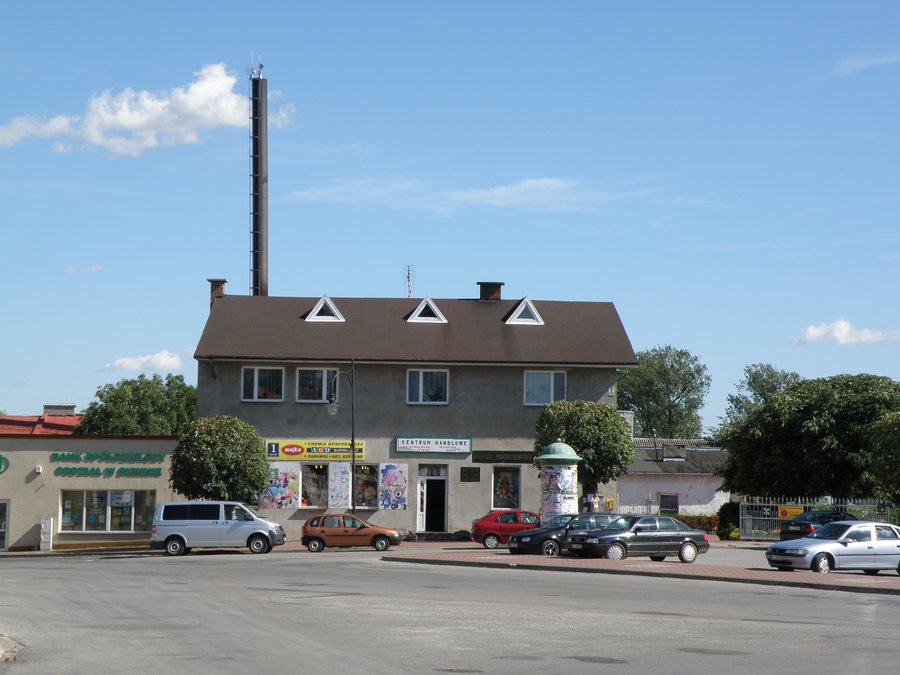 File:Sienno - mazowieckie (14).JPG
Photo: Alina Zienowicz (Ala z) via Wikimedia Commons, CC BY-SA 3.0
Sienno’s History in Chronological Order
Sienno was already in existence in the mid-14th century. In 1431, Dobiesław Oleśnicki established an independent parish and had a brick church built. Cardinal Zbigniew Oleśnicki consecrated this church in 1442. This makes it possible to distinguish the history of the town from the milestones in its church history: Sienno’s existence predates the establishment of the parish, and the consecration took place eleven years after the parish was founded. This sequence gives you a tangible chronological framework without treating the parish, church construction and consecration as one and the same event.
The Church and Founding Plaque
The Gothic Revival Church of St. Sigismund dates from the 15th century. A founding plaque from the time of the church has been preserved and is of historical and artistic value. The church’s history therefore encompasses not only events and dates, but also an object passed down through the generations. For travellers interested in the history of religious architecture, two perspectives complement each other here: the style identifies the building’s architectural character, while the founding plaque is a testimony from the same period. In addition to the dates, this offers further historical connections that bring Sienno’s church history to life.
Bell Tower and Kopiec
A Baroque bell tower in Sienno dates from the 18th century. Alongside the Gothic Revival church, it brings a different architectural style and a later period into view. Kopiec, a remnant of the Oleśniccy family’s castle, lies in the eastern part of town. The Oleśniccy were a knightly family from the Dębno coat of arms clan. Kopiec points to the history of a castle and a specific family, rather than to the founding of the parish. These themes offer different perspectives for exploring local culture and history: the tower is identified by its period and architectural style, while Kopiec centres on the Oleśniccy family’s castle. This extends the view beyond the church to include a Baroque building and the memory of the Oleśniccy castle.
The Renovated Market Square
Sienno’s renovated market square is a point of interest and looks particularly beautiful after dark. This sets the square apart from historical connections tied to specific periods: its distinctive character lies in its renovated appearance and evening atmosphere. It offers another focal point for choosing where to visit, alongside church history and the castle’s legacy. If you want to assess Sienno not only by its buildings but also by the impression made by a square, you can consider the market square as a distinct part of the town’s character.
Discover more destinations: Drezno, Gniazdków, Lipsko, Gmina Ciepielów, Kochanówka, Sadkowice, Wodąca
For the overview of the wider area: Lipski.

