
Dąbków: Discover Church History and Memorial Sites
Accommodation in Dąbków
Dąbków is best explored through its local history and the traces left by different eras. Its former name, Felsendorf, a former Protestant church, a cemetery, and several memorial sites form a clear historical focus. The Yellow Route, which leads from Lubaczów to Dąbków, is another point of interest. If you are looking for a destination with these themes, the local history and route information provide concrete starting points for planning your visit.
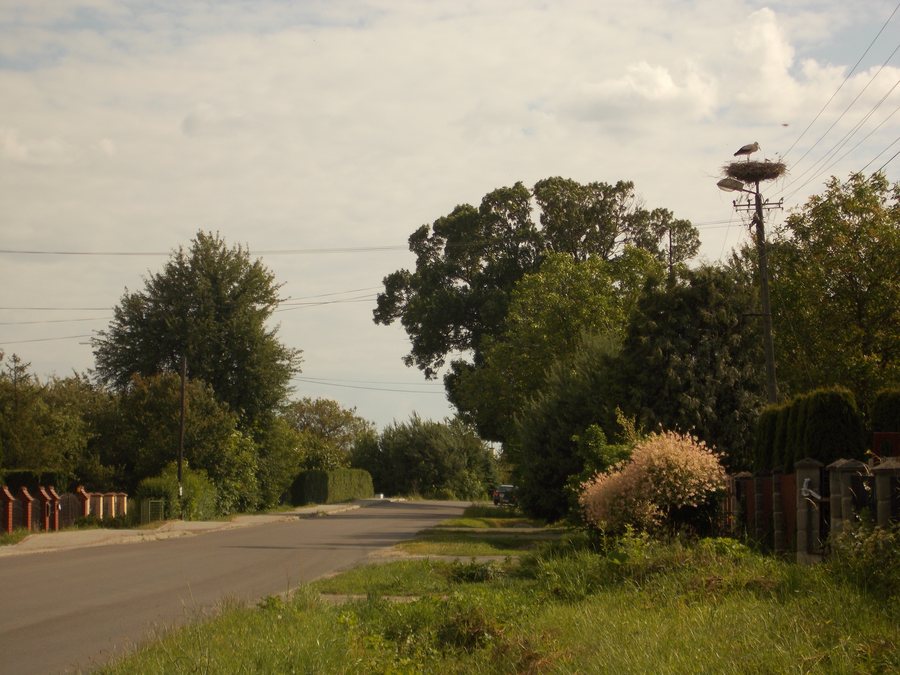
From Felsendorf to Dąbków
Dąbków was founded in 1783 as a German settlement as part of the Josephinian colonization and was initially called Felsendorf. The later place name commemorates General Stanisław Dąbek, who lived in Dąbków: in 1949, at the residents’ request, Felsendorf was renamed Dąbków in his honor. These two dates tell of different chapters in the town’s history, without requiring you to piece together subjects from widely separated periods.
An important historical landmark is the former Protestant church. Built in 1886, it is now used as a Roman Catholic branch church dedicated to the Sacred Heart of Jesus. It remained unchanged until 2011, when it was extended. The church is described as the second-oldest brick church in the Lubaczów municipality. Check local opening arrangements before visiting.
Church, School, and Memorial Sites
Several other memorials are connected with the town’s history. A cross erected in 1920 stands between the church and the school. It commemorates the young people who fell in the Polish-Ukrainian fighting in late 1918. The former denominational school building was constructed toward the end of the 19th century and provides another historical reference point in this area.
A historic chapel stands on private property opposite the former school building. It contains figures of Saint Joseph and the Mother of God. The chapel was probably built in 1886 by Protestants during construction of the church.
An obelisk commemorates General Stanisław Dąbek and residents of Dąbków and Opaka who were victims of the Second World War and of killings by Ukrainian nationalists of the OUN-UPA between 1944 and 1947. It was unveiled and consecrated on October 26, 2014. Local commemoration thus encompasses both events from late 1918 and the victims of the years 1944 to 1947.
Cemetery and Yellow Route
The former Protestant cemetery is about 300 meters from the church. Only a few tombstones remain, alongside several imposing old trees. The former Protestant cemetery, including its tombstones and old trees, has been protected as a historic monument since February 15, 2019, under registration number A-1595. For orientation, the approximate distance from the church and the visible trees help distinguish this site from the other memorials.
The Yellow Route also provides a concrete reference point for planning your trip: it starts at the town square in Lubaczów and reaches Dąbków after 3 kilometers. In Dąbków, the former Protestant church, built in 1886, lies along its route. Separately, the church is located on the main road through the town. This follows a former transport route between Lubaczów, Wielkie Oczy, and Jaworów. The route information and the historic road connection therefore describe two different points of reference for Dąbków.
For the broader travel overview: Gmina Lubaczów.

