
Chełm: Chalk Tunnels, Culture and Architecture
Accommodation in Chełm
Chełm can be explored through several cultural themes: underground chalk tunnels, exhibitions, historic sites and themed walking routes. When planning your trip, you can choose from a range of interests—from natural and urban history to architecture and the city’s religious and cultural traditions. The routes themselves also vary: some lead to specific places of remembrance, while others bring together several stops or follow a river.
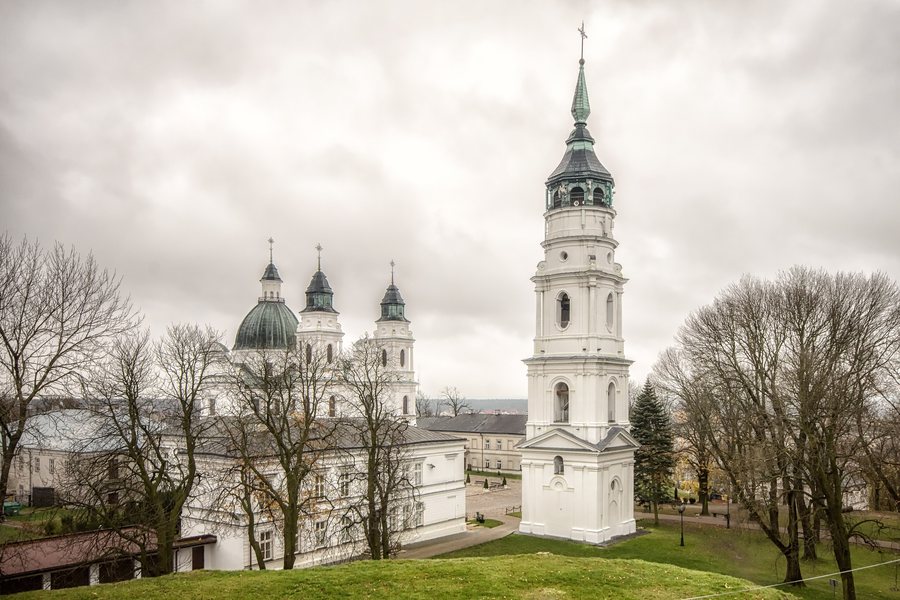 File:SM Chełm Bazylika Narodzenia Najświętszej Maryi Panny - dzwonnica 2022 (6714).jpg
Photo: Sławomir Milejski via Source, CC BY-SA 4.0
Museum and Chalk History
The Muzeum Ziemi Chełmskiej consists of four buildings in the centre of Chełm. The museum presents permanent exhibitions and numerous temporary exhibitions. Its subject matter ranges from prehistoric fauna and flora to traditional culture and contemporary art. Natural history and culture are presented alongside subjects that extend into the present day. If you would like to plan your visit around particular exhibition topics, it is worth checking the current programme.
The Chełm Chalk Tunnels offer a different perspective on the city’s history. The tourist route covers about one kilometre of underground passages beneath the city centre. Chambers and niches along the way illustrate the history of chalk mining and the history of Chełm. This underground tour offers a distinct focus alongside the museum’s exhibitions: here, the tunnels themselves provide the setting for exploring chalk extraction and the city’s history.
Walking Routes and Themed Trails
The urban Uherka Boulevard is a paved walking and cycling path along the Uherka River. It runs from the centre of Chełm to the Żółtańce Reservoir and is about 3.5 kilometres long. Park avenues and riverside greenery are part of the route. If you are looking for an outdoor route, this one combines the river, urban green spaces and a clearly defined destination at the reservoir.
The Szlak Kultury Wschodniej (Eastern Culture Trail) passes through ten stops associated with Orthodox and Uniate heritage. These include the 13th-century crypts of the princes of Halych, theological seminaries, churches and memorials to prominent figures in Ukrainian history. The trail thus combines religious sites with places of remembrance. The Szlak Kultury Żydowskiej (Jewish Culture Trail) has a different focus: this walking route leads to places that recall Chełm’s Jewish history and the community that helped shape the city over centuries. Most of the stops on this trail are in the city centre.
Historic cultural sites can also be explored on different routes. The Szlak Kultury Zachodniej (Western Culture Trail) passes ten stops at Chełm’s most important historic cultural sites; walking the route takes about a few hours. The Szlak chełmskich zabytków architektury (Chełm Architecture Heritage Trail) is a walk through several centuries of Chełm’s architecture, linking the built heritage of three cultures. If you would like to focus on architecture, this second route centres on the cityscape’s historical range, while the Western Culture Trail leads to the city’s historic cultural sites.
Góra Chełmska
The late Baroque Basilica of the Nativity of the Blessed Virgin Mary is the principal building on Góra Chełmska. An observation tower on the hill offers panoramic views of Chełm and the surrounding area. Góra Chełmska therefore brings together two different perspectives: the architecture of the basilica and views across the city and its surroundings.
Discover More Destinations
Discover more destinations: Stołpie, Nowosiółki-Kolonia, Stańków, Huta, Brzeźno, Gotówka, Dorohusk, Romanówka.
Go to the main travel overview: Chełmski.

