
Discover Chełmski: Cycling Routes, Bodies of Water and Culture
Accommodation in Chełmski
Cycling routes, bodies of water and historic buildings shape the impressions of the municipality of Chełm and the wider Chełmski County. When planning your trip, it is worth considering the different route lengths and landscapes alongside the cultural attractions. This will help you decide which themes interest you most.
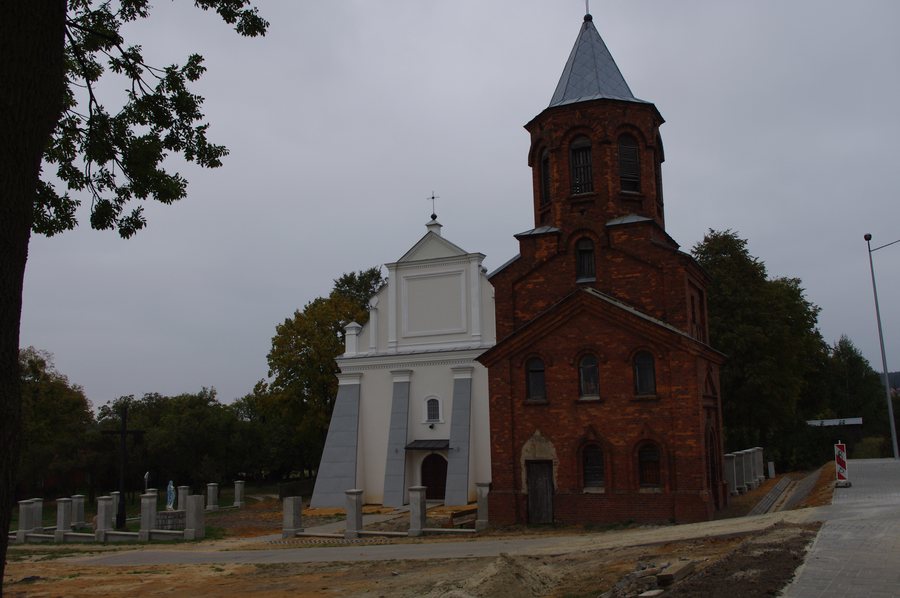 Podgórze - former Orthodox church, now Roman Catholic parish church
Photo: Ar2rek via Source, CC BY-SA 3.0 pl
Podgórze - former Orthodox church, now Roman Catholic parish church
Photo: Ar2rek via Source, CC BY-SA 3.0 pl
Cycling Routes in the Municipality of Chełm
Several cycling routes offer a direct comparison of their lengths and courses. The green-marked route “Leśne ostępy Chełmskiego Parku Krajobrazowego” is 19.45 kilometres long. It runs from the northern outskirts of Chełm via the area around the Stańków Reservoir and the Uherka Valley, then through the wooded areas near Czułczyce and Sajczyce to Ruda Opalin. Its name refers to the landscape park; the route described connects different places in the municipality.
At 18 kilometres, the red-marked “Uroki Sobowickie” route is a similar length. A shorter option for comparison is “Pagóry Janowskie,” at about 8 kilometres. The blue-marked “GMINA CHEŁM – wpisane w krajobraz, wpisane w historię” cycling route covers considerably more ground: it is 75 kilometres long and leads to places in the municipality connected with history, nature, recreation and leisure. These distances help you gauge the amount of cycling involved without making assumptions about travel time or difficulty.
Another route to help you find your bearings is the green-marked “Leśne ostępy Chełmskiego Parku Krajobrazowego.” Its course from the outskirts of the town via the reservoir and the valley to the wooded areas shows how natural features and place names come together along a specific route. “Południowe barwy krajobrazu Gminy Chełm” also runs along the Uherka, passing through Pokrówka, Żółtańce and Żółtańce Kolonia. The route offers scenic views throughout and is geared towards recreation. Before setting out, check the current signage and trail conditions.
Bodies of Water, Landscape and Nature
Chełmski Landscape Park was established in 1983 and covers 16,457 hectares, of which 4,702 hectares lie within the municipality of Chełm. The breeding of 152 bird species has been recorded in the park. This gives an idea of the importance of birdlife, without promising that particular species can be spotted at a specific location.
Stańków Reservoir is an artificial body of water covering about 40 hectares, with a depth of around 4 metres. As it is fed by the Uherka, it is also called Zalew na Uherce. Its muddy bottom is one of its features, as is the presence of numerous rare and protected waterbird species and the European pond turtle.
At Zalew Żółtańce, one dam leads to a supervised bathing area, while another section is designated for fishing. Facilities in the area include a beach, jetties, benches, covered tables, barbecue and fire pits, sports courts, a playground and an outdoor fitness area. The cycling route “Południowe barwy krajobrazu Gminy Chełm” also mentions facilities at Zalew, including a jetty, a playground and a toilet for people with disabilities. A bus stop is about 20 metres from the beach. As operating conditions at the bathing area may vary seasonally and public transport services can change, check the latest information before your visit.
Zalew Staw offers a different point of comparison in terms of size: it covers 15 hectares. Its bathing area has a large car park, two jetties, covered benches and a playground. There is also a fishing area with easy access to the water. The bodies of water described thus differ not only in size but also in the facilities mentioned for each.
Culture and Other Regional Attractions
The municipality of Chełm is home to historic buildings from different periods. The stone tower in Stołpie dates from the 12th century. In Podgórze, the Roman Catholic parish church of Christ the Saviour was built as an Orthodox church; it and an Orthodox monastery have been mentioned in historical sources since 1440. The palace in Srebrzyszcze is a 17th-century building founded by Józef Łopuski, the sword-bearer of Chełm. The building is surrounded by a park laid out in the style of an Italian garden.
Further afield in Chełmski County, the landscape spans the macroregions of Polesie Wołyńskie and Wyżyna Lubelska. Pagóry Chełmskie, a series of gentle hills, rise to 300 metres above sea level and consist of chalk marl and sandstone. Nature reserves offer their own distinctive features: Serniawy protects riparian forest and low-growing oak-hornbeam forest, with numerous pedunculate oaks about 200 years old and black alders more than 100 years old. The fully protected plant dziewięćsił popłocholistny is found in Stawska Góra Nature Reserve; four locations where this species occurs are known in Poland. The 4.5-kilometre educational trail in Bachus Nature Reserve offers a way to explore the area; trail maintenance may vary.
Fishing is also among the activities mentioned in the wider area of Chełmski County, with the Bug River the main example among the listed waters. When choosing accommodation in Chełmski, you can consider cycling routes, bodies of water, cultural attractions and natural areas as different focuses for your trip.
Discover More Destinations
Discover more destinations: Gotówka, Chełm, Huta, Stańków, Brzeźno, Nowosiółki-Kolonia, Czarnołozy, Dorohusk, Rejowiec, Romanówka, Stołpie.
For the main travel overview: Lublin.

