
Łapczyca: Church, Pilgrimage and Historic Routes
Accommodation in Łapczyca
Łapczyca brings together architectural history, historic routes and a pilgrimage tradition dating back to the 19th century. If you are looking for a Polish town with specific cultural and historical points of interest, the focus here is above all on a church that has shaped the town’s history for centuries, and on routes connecting Łapczyca with the surrounding area.
A Gothic church on historic routes
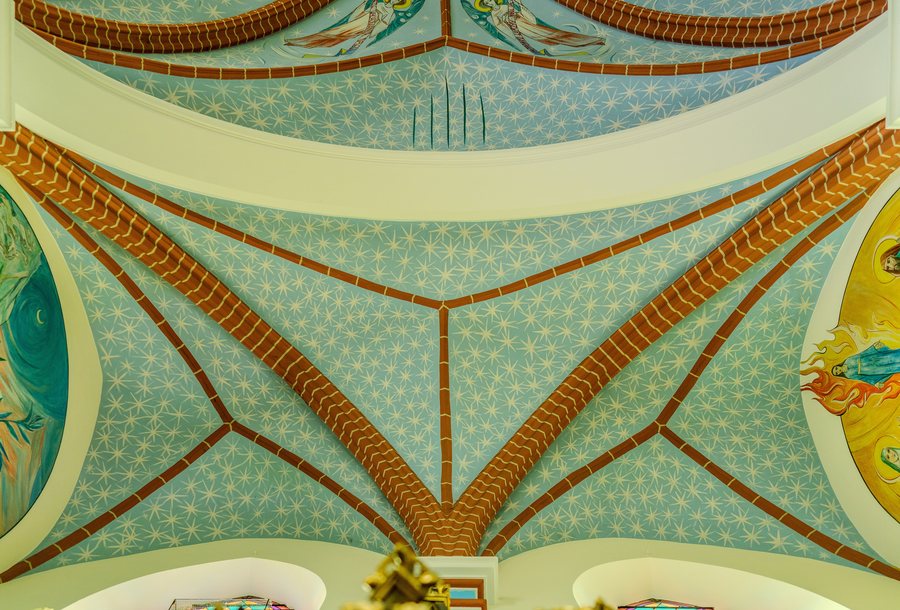
The Church of the Nativity of the Blessed Virgin Mary is a Gothic brick building. It was built in 1340 and endowed by King Casimir the Great. Its construction date makes it a tangible point of reference for Łapczyca’s medieval history. Rather than an abstract timeline, there is a specific building here whose origins and royal endowment can be considered together.
The church stands on the Via Regia Antiqua, a historic route from Bochnia to Chełm. Several names for this route have been recorded: the Amber Road, later the King’s Road, and today the Via Regia Antiqua. This succession of names points to the route’s changing historical significance; it also offers a way to view the church not only as a building in its own right, but in the context of the region’s ancient connections.
Another historical connection is a former trade route from Kraków towards Ruthenia and Hungary. The church stands on a hill between spreading lime trees, beside this route. In Łapczyca, the building, its elevated setting and the memory of former trade routes thus come together. For your travel planning, this offers an alternative to a simple sightseeing list: you can explore the town through its architectural history and its place in the region’s past.
Pilgrimage and remembrance
A pilgrimage from Bochnia to the church in Łapczyca has taken place every year since 1849. It commemorates the reported miraculous saving of the town from a cholera epidemic. The town’s history therefore encompasses more than the church’s medieval construction date: a recurring religious practice also connects Łapczyca with Bochnia and keeps a historical memory alive. If you are interested in this tradition, check the pilgrimage dates before your trip; the fact that it takes place annually does not, by itself, specify a date.
The church and the pilgrimage offer two different perspectives on time. The brick building points to the 14th century, while the pilgrimage, held annually since 1849, represents a tradition that continues into the present. This distinction can help you decide what to focus on during your stay: architectural history on the one hand, religious remembrance on the other. Both themes are connected with the same place in Łapczyca, without equating the building’s history with the significance of the pilgrimage.
Further traces and directions
Remains of a medieval hillfort can also be found in Łapczyca. Its heyday lasted from the 9th to the 11th century. This adds an earlier historical period to the picture alongside the church. If you are interested in the older layers of the town’s history, this offers another point of reference in time alongside the Gothic building. Together, the two can be read as separate chapters, not as one and the same attraction.
For your journey, the Raba Route provides a reference point: it continues to Łapczyca, where it joins National Road 94, and runs towards Bochnia. Check the current route and road conditions before setting out. This keeps the route information as a planning aid rather than a substitute for up-to-date guidance while travelling.
If you are looking for a hotel for a culturally focused stay, you can assess Łapczyca as a destination through these themes: medieval architectural history, historic trade routes, pilgrimage and the remains of the hillfort. Bochnia is connected both to the course of the Via Regia Antiqua and to the pilgrimage tradition. Historic routes and the pilgrimage tradition thus link Łapczyca with Bochnia.
The clear historical focus is especially helpful when choosing your destination. The church brings together its construction date, founder, location and route; the pilgrimage adds a tradition that recurs every year. The hillfort points to an earlier era. If you take these themes into account when looking for a hotel in Łapczyca, you will have a concrete starting point for planning the rest of your trip.
For the broader travel overview: Winnica.

