
Wesołowo – Historic Traces and Routes
Accommodation in Wesołowo
Wesołowo brings together several concrete points of interest for planning a trip: brick buildings with different historical classifications, two family cemeteries in the surrounding area, and two routes that pass through the village.
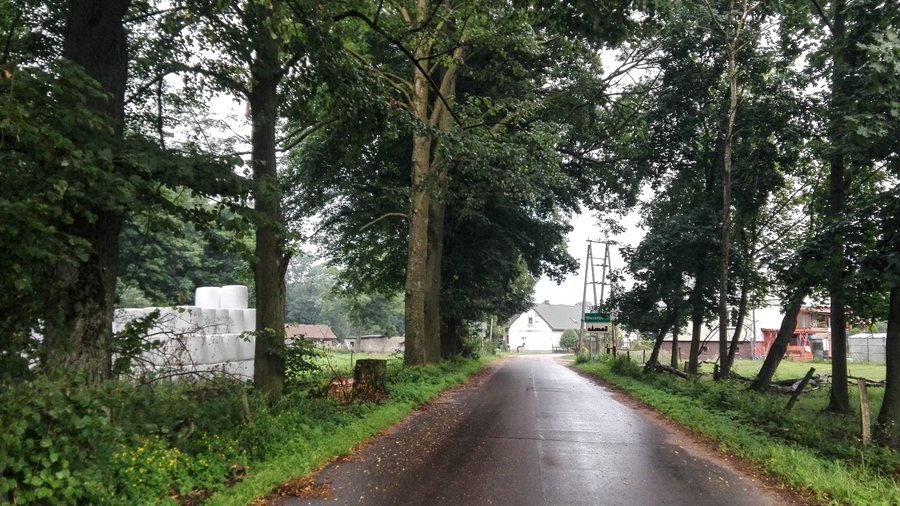
Brick Buildings in Wesołowo
House No. 17 is a brick building dating from the 19th or 20th century. Another brick building is located in the school complex: it is an outbuilding from the early 20th century. This means two distinct architectural points of reference stand side by side in the village, one dating from the early 20th century and the other more broadly dated to the 19th or 20th century.
These periods can also be compared with those of the nearby cemeteries. One family cemetery dates from the second half of the 19th century and lies southeast of Wesołowo. The outbuilding and the family cemetery to the east date from the early 20th century. House No. 17, dated to the 19th or 20th century, has a broader timeframe that spans these periods. This provides a nuanced view of the historic traces, rather than attributing all the buildings and places to a single era.
Two Family Cemeteries Nearby
The two family cemeteries are distinct points of interest near Wesołowo. One lies 0.8 km east of the village and dates from the early 20th century. The other is 0.5 km southeast of Wesołowo and dates from the second half of the 19th century. Their direction, distance, and dates help distinguish the two sites.
For planning your trip, comparing the details is particularly useful: the cemetery to the southeast is closer to Wesołowo and dates from an earlier period; the one to the east is farther away and dates from the early 20th century. Both are identified as family cemeteries, but they have different locations and dates. The two family cemeteries are outside Wesołowo; the buildings are in the village.
Two Routes Through the Village
The routes also give Wesołowo a concrete point of reference for trip planning. The 44 km-long Szlak Jeziora Oświn passes through the village. The Trasa “Szlakiem Gór” also passes through Wesołowo. This connects two named routes with Wesołowo; the total length of the Szlak Jeziora Oświn is also specified. The route names and length provide another way to consider the village when looking for a destination.
If you would like to consider cultural history and route connections together, Wesołowo offers several clearly distinct points of interest: buildings in the village, two nearby family cemeteries with different location details, and two routes that pass through Wesołowo. This combination makes the description of the village more specific without conflating the individual points into a single complex or place to visit.
Additional Cultural Attractions in Węgorzewski
In the wider Węgorzewski destination area, Węgorzewo offers further points of cultural and historical interest. The grounds of the Muzeum Kultury Ludowej include a small open-air museum featuring traditional Masurian architecture. It includes wooden houses dating from the 18th and 19th centuries. This look at Masurian architecture complements the historic buildings in Wesołowo with a separate location and an earlier period.
Also in Węgorzewo is the Cmentarz nad jez. Święcajty, a cemetery for soldiers killed in the First World War. It contains the graves of 344 German and 234 Russian soldiers. The open-air museum and the cemetery are in Węgorzewo. When planning, you can therefore distinguish which historic points of interest are in the village and which are in Węgorzewo.
Consider Wesołowo as a Search Destination
When choosing a destination, Wesołowo offers a combination of architectural and historical points of interest, as well as routes through the village. The dates of the local buildings and nearby family cemeteries mentioned range from the second half of the 19th century to the early 20th century; House No. 17 is dated to the 19th or 20th century.
Discover more destinations: Stręgielek, Trygort, Przystan, Olszewo Węgorzewskie, Pozezdrze, Kolonia Rybacka, Jakunówko, Ołownik
For the wider travel overview: Węgorzewski.

