
Nowe Kiełbonki on Lake Kiełbonki
Accommodation in Nowe Kiełbonki
Nowe Kiełbonki is located on Lake Kiełbonki and combines this setting with a settlement history dating back to around 1700. For travel planning, two topics can be considered separately: the village’s geographical location and its historical development. Its proximity to National Road 58 and its distance from Stare Kiełbonki provide additional orientation.
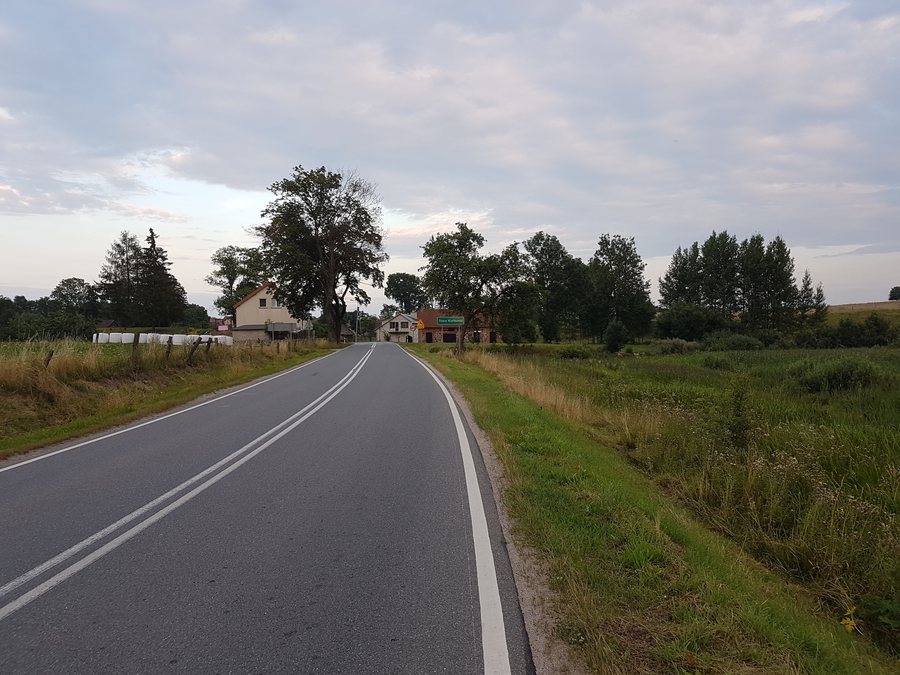 File:Stare Kiełbonki - entrance from Nowe Kiełbonki, 2016.jpg
Photo: Mateusz Giełczyński via Wikimedia Commons, CC BY-SA 4.0
On Lake Kiełbonki: the village’s location
Lake Kiełbonki is the specific geographical point of reference for Nowe Kiełbonki. If you are looking for a lakeside location when choosing a destination, you can therefore consider the village a lakeside destination. The village’s location is a useful first point of reference when deciding what kind of surroundings you would like to stay in. It answers a different question from the historical information: the lake situates the village geographically, while its origins and settlement pattern describe its past. This makes it possible to consider the landscape setting and the history of the place separately, yet together, when choosing a travel destination.
Origins and settlement pattern
Around 1700, Nowe Kiełbonki was established on cleared land as a rent-paying village with hereditary rights. Both its approximate founding date and the legal form of the time are therefore part of the village’s history. The land clearance describes the circumstances of its founding. Its development on Lake Kiełbonki in the form of a linear village is also part of the village’s history. A linear village is a settlement arranged along a line. Together, these bring several aspects into focus: its founding around 1700, the cleared land, its historical legal form, and the linear shape of the village’s development. For travellers interested in the history of rural places, this combination offers a specific way to learn about Nowe Kiełbonki beyond its lakeside setting.
Orientation between National Road 58 and Stare Kiełbonki
There are two other points of reference for geographical orientation: Nowe Kiełbonki is near National Road 58 and about 2 km from Stare Kiełbonki. The road and the other place name describe different location relationships; together, they help you locate Nowe Kiełbonki on a map. The distance is approximate. When comparing destinations, you can consider this rough distance alongside the lakeside setting.
The regional museum is located in Piecki
Another point of reference for regional history is the Regional Museum named after Walentyna Dermacka née Sapieha in Piecki. It is located in Piecki, not in Nowe Kiełbonki. So if you want to combine the village’s history with an interest in the museum, keep the two place names distinct: Nowe Kiełbonki is the village by the lake, while Piecki is where the Regional Museum is located. This lets you consider the museum as a separate point of reference for regional history, while Nowe Kiełbonki is described in terms of its lake and village history.
When searching for hotels, the first question is therefore whether the destination is right for you: do the location on Lake Kiełbonki and the village’s historical development fit your travel plans? This way, the destination and the cultural point of reference remain clearly distinct in your planning.
Discover more destinations
Discover more destinations: Mostek, Krutyński Piecek, Stare Sady, Kosewo, Piecki, Bagienice Małe, Mikolajki, Mragowo.
For the broader travel overview: Mrągowski.

