
Myczków: Discover Churches and Boyko Culture
Accommodation in Myczków
Two cultural highlights stand out for a trip to Myczków: the history of two neighboring churches and the Muzeum Kultury Duchowej i Materialnej Bojków w Myczkowie. The churches’ history includes a foundation dating from 1899, a brick bell tower built in 1999, and an old bell of Orthodox origin. The museum offers a different thematic focus: the spiritual and material culture of the Boyko people, along with educational activities. When planning your visit, you can therefore decide whether you are more interested in architectural and religious history or in cultural activities.
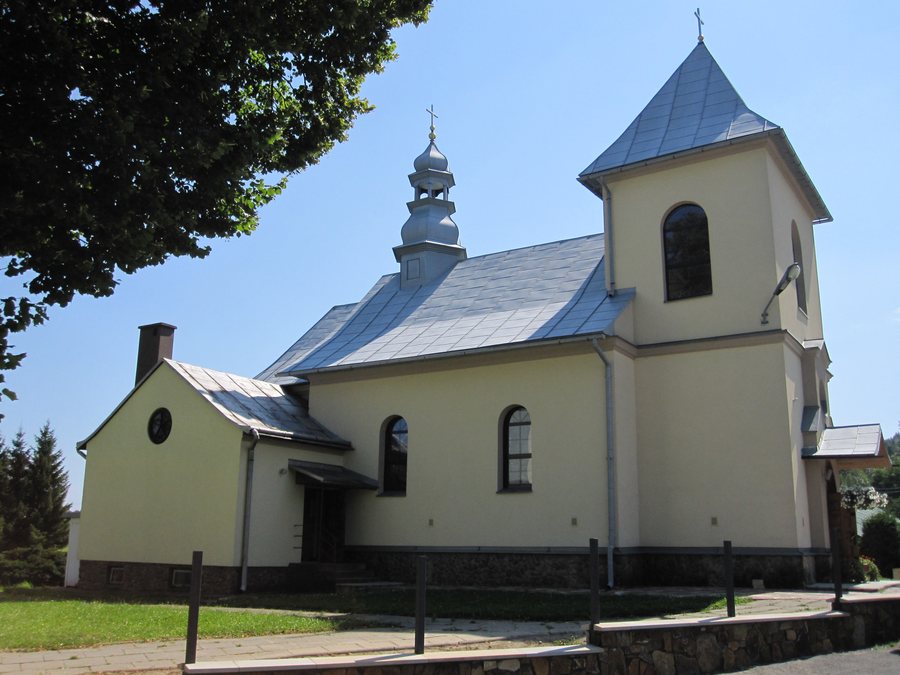
Churches in Myczków: Foundation, Dedication, and Bell
The first of the two neighboring churches in Myczków was built in 1899 through a foundation by Jan Nepomucen Zatorski. Zatorski owned the local estate. The year of construction, the benefactor, and his connection to the place thus form a specific context for the building’s origins. The foundation connects the church’s history with a person and the local estate; the building is therefore not just associated with a date, but also with a named benefactor. If you like to understand historic sites in terms of the circumstances in which they were created, this connection offers a clear point of reference.
Between the two churches stands a brick bell tower, built in 1999 to a design by Józef Kruk of Lesko. An old bell from an Orthodox church is mounted on it. The date and the origin refer to different things: 1999 dates the bell tower, while the bell is described as being of Orthodox origin. The years 1899 and 1999 are exactly a century apart, but mark different events: the foundation of the first church and the construction of the bell tower. This distinction helps you consider the building history and the history of the bell separately.
One church in Myczków is dedicated to Najświętszego Serca Pana Jezusa, or the Most Sacred Heart of Jesus in English. A church’s dedication identifies the figure or aspect of faith to whom it is dedicated; the Polish name and its English meaning help specify this religious connection. The dedication should be distinguished from the building chronology: the year 1899 refers to the first of the two neighboring churches, while the dedication names a religious affiliation. This offers another perspective for anyone interested in Myczków’s religious culture.
Boyko Culture and Educational Activities
The Muzeum Kultury Duchowej i Materialnej Bojków w Myczkowie is listed as a point of interest in the Solina municipality. Its name highlights the spiritual and material culture of the Boyko people as its thematic focus. The museum thus broadens the picture of Myczków beyond the architectural history of its churches: here, the focus is on Boyko culture. This is a clear distinction to bear in mind when planning your trip and weighing up church history against a culture-focused museum visit.
The museum’s educational activities include the opportunity to sample Boyko dishes. Pottery-making under the supervision of a potter is also available. The activities appeal to different interests: sampling the dishes offers a culinary experience, while pottery-making involves hands-on work under the supervision of a potter. You can use this distinction when planning the cultural part of your stay: would you rather explore Boyko culture through food or choose a practical activity? If one of these activities is important to your visit, check in advance whether it will be available on your chosen date.
Discover more destinations: Manasterzec, Kalnica, Zwierzyń, Solina, Smerek, Rabe, Hoczew, Lesko.
For the regional travel overview: Leski.

