
Discover Zatwarnica: Hylaty, Waterfall and Bojko Heritage
Accommodation in Zatwarnica
Zatwarnica offers several concrete points of interest for planning a trip: the “Hylaty” Nature and History Trail, a waterfall in the bed of a former millrace, and places that recall the history of the area. If you are looking for a hotel in Zatwarnica, these themes can help you decide what you are interested in experiencing at your destination. Nature and culture are not interchangeable buzzwords here; they have identifiable points of reference in the village.
The Hylaty Trail as a central theme
The “Hylaty” Nature and History Trail is the main feature of the “W Krainie Bojków” Ecomuseum. The Ecomuseum begins with the “Chata Bojkowska”: the cottage is a reconstruction of a dwelling traditionally found in this Carpathian region and has been adapted as a local educational and cultural centre. The Ecomuseum thus focuses on both regional architecture and nature and history.
The “Hylaty” nature trail runs from Zatwarnica to the summit of Dwernik Kamień, at an elevation of 1,004 metres. The 12-kilometre nature and history trail is marked in green. Its length and destination give you two concrete details to help you fit the hike into your travel plans. It is worth treating the route as an outing in its own right: it leads to a named summit, while the Ecomuseum explores the region’s cultural and educational context.
The history of the mills is also part of the Hylaty theme. The route passes the remains of a former mill in Zatwarnica. This trace can be appreciated alongside the trail’s landscape without losing sight of the Ecomuseum’s cultural themes. Those interested in both nature and local history will find several points of reference here for exploring Zatwarnica.
Waterfall and traces of the mills
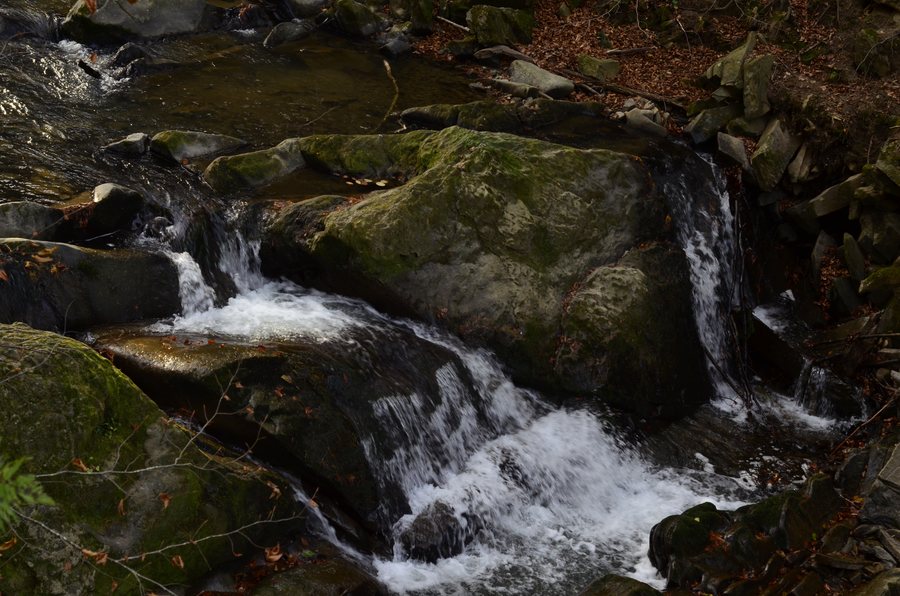
A small waterfall lies upstream of the confluence of the Hylaty and Ryka streams, in the bed of a former millrace. Its location connects a visible landscape feature with the former use of the channel. Clearly visible remains of former mills have also been preserved along various stretches of the Głęboki stream in Zatwarnica. Together, these places show how closely water and milling history are linked in the surviving features of the village.
When choosing between the different themes, this distinction is helpful: the Hylaty Trail has a specified length and a named destination; the mill remains and waterfall offer concrete points of reference to the landscape and its former use. These are different ways to explore Zatwarnica, not interchangeable stops. Which interests you most can influence how you plan your days and where you choose to go.
Local history and remembrance
Alongside several generations of Bojko villagers, Polish militiamen who died in 1946 are buried in the former village cemetery. A simple monument commemorates their grave.
Another way to explore regional history is the local history room in Zatwarnica. Its oldest exhibits are several hundred years old. Visitors can learn more there about the history and events of the surrounding area, legends passed down from generation to generation, and the surrounding natural environment. The history room broadens the picture of Zatwarnica with traditional stories and historical objects; the Hylaty Trail, by contrast, focuses on nature and history along a named route.
When looking for suitable accommodation, you can first consider what you want your trip to focus on: a hike with specific details about its length and summit destination, the landscape around waterways and mills, or the history and legends of the surrounding area. These themes provide a factual guide to Zatwarnica without requiring any one aspect to define the place entirely.
Discover more destinations
Discover more destinations: Smolnik, Brzegi Dolne, Dwernik, Procisne, Krościenko, Muczne, Stuposiany, Polana.
For the broader travel overview: Bieszczady.

