
Ustrzyki Dolne: City Trails, Mill Museum and Ski Areas
Accommodation in Ustrzyki Dolne
There are several ways to discover Ustrzyki Dolne: solve puzzles around the city, follow hiking trails with different stated durations, or visit museums covering milling technology, cultural history and the nature of the Bieszczady. There are also several ski stations in winter. Which of these aspects you focus on can help you choose the right place to stay.
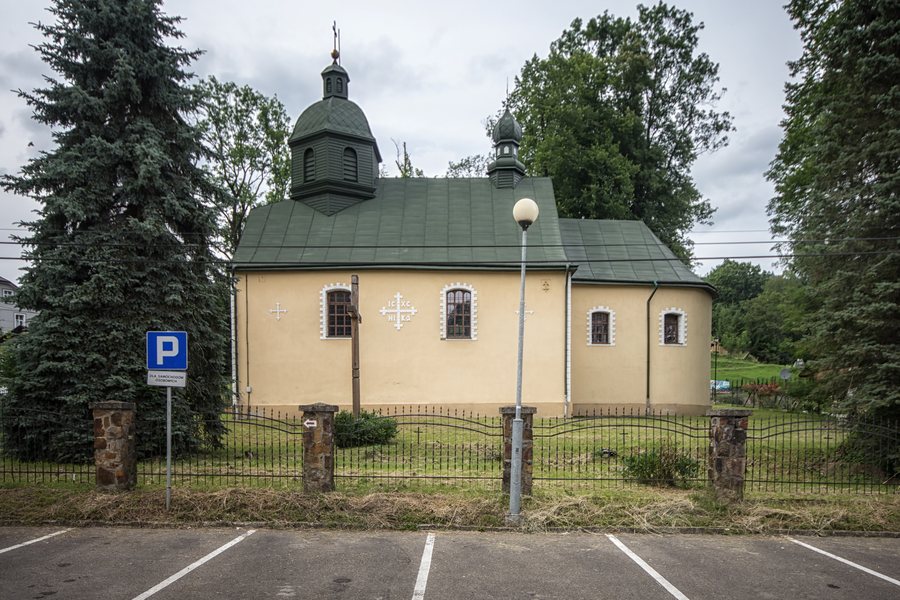 SM Ustrzyki Dolne Cerkiew św Michała Archanioła 2020 (0)
Photo: Sławomir Milejski via Wikimedia Commons, CC BY-SA 4.0
SM Ustrzyki Dolne Cerkiew św Michała Archanioła 2020 (0)
Photo: Sławomir Milejski via Wikimedia Commons, CC BY-SA 4.0
Explore the city with puzzles and signposts
The quest “Ustrzyki Dolne – Miejsce Zbiegu Kultur” invites residents and tourists to explore the city on foot. Each point on the map has a puzzle associated with it. You can get maps and instructions from the Bieszczadzkie Centrum Turystyki i Promocji at Rynek 16, or download them from the tourist section of the city website; check the current location there. This lets you combine the puzzles with your own walk around the city.
Two other routes also start at notable points in the city. The Szlak Kolonizacji Józefińskiej starts at the Izba Regionalna. On the way to the city market, you’ll find the first information board and route markers. The Szlak Naftowy also begins at the Izba Regionalna and continues through the pedestrian zone by the market and along Fabryczna Street to Brzegi Dolne, Łodyna, Leszczowate and Ropienka.
Milling, nature and architectural history
The Muzeum Młynarstwa i Wsi has been at the site of a mill built in 1925 since 2011. Its four floors display a complete grain-cleaning and milling system in a mill with modern drive technology. At the annual Święto Chleba, visitors can sample baked goods, among other things. The milling technology and the festival offer different focuses for a museum visit: one on grain processing, the other on the finished baked goods.
The Bieszczady National Park Museum devotes its exhibitions to the geology, geomorphology and hydrology of the Bieszczady, as well as its climate, soils, flora and fauna. These include exhibitions featuring regional animals and plants. The Sanktuarium Matki Bożej Bieszczadzkiej offers a different perspective on architectural history: the brick church was built in 1740 in the Baroque style.
Choose hiking trails to suit your available time
For a longer hike, the blue-marked Szlak Źródła Strwiąża leads from the market square to the Strwiąż springs and back via Park pod Dębami. The route is eight kilometres long, with a stated walking time of three and a half hours. The black-marked trail to the Jewish cemetery takes considerably less time: it starts in the centre, passes through the city and goes by the municipal stadium. The walking time is around 30 minutes without a break.
The Korona Ustrzyckich Gór connects the headquarters of the Bieszczadzkie Centrum Turystyki i Promocji with several named elevations: it goes via Kamienna Laworta, Mały Król and Holica to the summit of Gromadzyń and continues to Orlik. From Orlik, the trail descends into the city. The sequence of place names makes this route a different way to find your bearings than the two trails with explicitly stated walking times.
Winter days and outdoor activity
Gromadzyń Ski Station is in the centre of Ustrzyki Dolne. Four drag lifts of different lengths provide access to several downhill runs. Laworta Ski Station has a 300-metre drag lift for beginners and a 100-metre conveyor lift for children. Its main run is 1,250 metres long and FIS-homologated for slalom and giant slalom. Ski station operating details may vary by season, so check conditions before your trip.
For cyclists, the pump track in Park Pod Dębami is another option for outdoor activity. It is open to the public and free to use; confirm the terms of use on site before your visit. In the Ogród Sensoryczny, a barefoot path runs over natural materials such as bark, sand, gravel, stones and pine cones. Alongside the hiking trails, the city therefore offers a cycling option and a path for experiencing different surfaces mindfully.
A planned project on the city’s history
The project “Szlak Umocnień Obronnych i Pomników Przeszłości” plans, as its first phase, to uncover sections of trenches from the First and Second World Wars. The four hills surrounding the city are named: Kamienna Laworta, Mały Król, Gromadzyń and Orlik.
Discover more local pages
Jasień. More local pages: Krościenko, Arłamów, Zatwarnica, Procisne, Bukowiec, Dwernik and Polana.
For the broader travel overview: Bieszczady.

.jpg)