
Słupsk
Accommodation in Słupsk
Słupsk brings together historic buildings and exhibitions with green spaces, cycling paths and pilgrimage route markers. When planning your stay, you can focus on different aspects: the city’s history, Witkacy’s works, time in the park or a stage of a long-distance cycling or pilgrimage route. This can help you decide which sides of the city interest you most before choosing your accommodation.
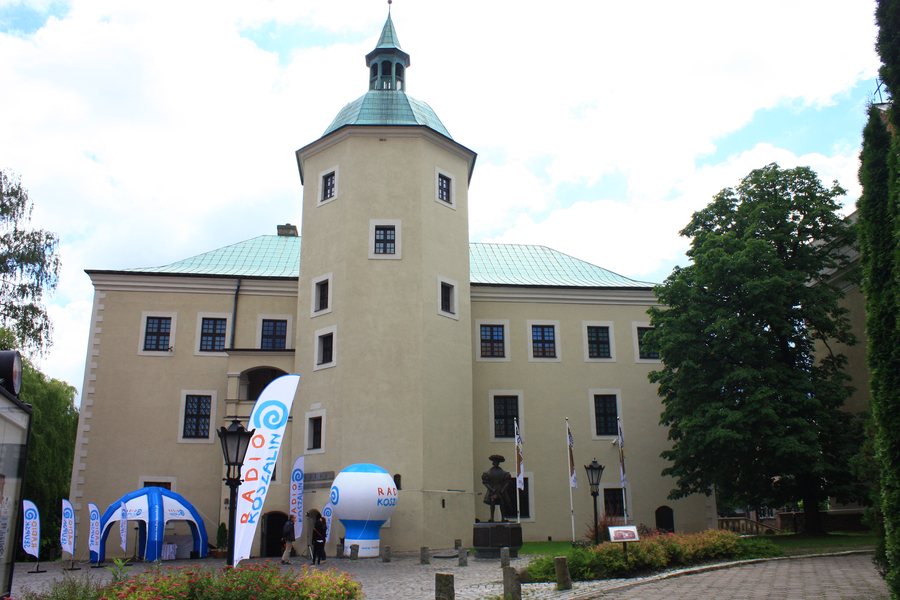
Castle, Mill and City History
Zamek Książąt Pomorskich was the former residence of the Gryfit dynasty. Duke Bogusław X had the castle built in the early 16th century; 1507 is considered its year of construction. Anyone interested in the history of Pomeranian rule will find a tangible historical landmark here in Słupsk.
A much older building is Młyn Zamkowy. The mill was built around 1310 in the left-bank part of Słupsk and is among the oldest industrial architecture buildings in Poland. The time between its construction and the castle’s shows two distinct periods in the city’s history: the medieval mill and the ducal residence of the early 16th century.
Witkacy and Other Cultural Venues
Biały Spichlerz houses the world’s largest collection of works by Stanisław Ignacy Witkiewicz, known as Witkacy. It also features the permanent exhibition “Słupsk. Miasto i ludzie” (“Słupsk. City and People”). Its exhibits explore the city’s history after 1945. Those interested in both Witkacy’s work and more recent city history will find two distinct themes under one roof.
Baszta Czarownic is currently home to Bałtycka Galeria Sztuki Współczesnej. Kościół św. Jacka is a former Dominican church. These places add further cultural and historical points of interest to the stories of the castle, mill and exhibitions, though they do not all represent the same period or function.
Park, River and Routes
Park Kultury i Wypoczynku is Słupsk’s largest park and recreation complex. Its facilities include extensive green spaces, a kayak launch, cycling paths and playgrounds. Visitors can enjoy a range of activities in the city: spending time in green surroundings, cycling, kayaking or visiting the playgrounds. The Słupia River winds through the park; its main course and the Młyński Canal together form Wyspa Spichrzów.
Słupsk is also a useful point of reference when planning a cycling trip: the 86-kilometre USBS cycling route connects Ustka, Słupsk and Bytów. The total distance gives you an overview of the route as a whole, but does not indicate the length of individual stages. If you prefer to travel on foot, you can explore the section of the Camino de Santiago that runs through Słupsk: it is part of Droga Pomorska and the pilgrimage route network to Santiago de Compostela. Yellow shells on a blue background mark the route; the signs are found on buildings, boards and posts.
Planning Your Stay
For September 2026, Zamek Książąt Pomorskich, Młyn Zamkowy and Biały Spichlerz share the same opening hours: they are closed on Mondays, open from 10:00 to 15:00 on Tuesdays, from 10:00 to 17:00 on Wednesdays and Thursdays, and from 11:00 to 18:00 from Friday to Sunday. If you plan to visit these three places, take the different weekday opening times into account when planning your day.
Centrum Informacji Turystycznej provides information about tourist attractions in Słupsk and the surrounding area. It also sells souvenirs, maps and publications about the history and tourism of the city and region. Murals offer another changing discovery: there are currently around 40 in Słupsk, and their number continues to change.
More places to include in your Poland travel plans: Kluki, Smołdziński Las, Losino, Komiłowo, Smoldzino, Siemianice, Widzino, Poddąbie.
For the broader travel overview: Stolp.

