
Sterdyń: Churches, Palace History and Places of Remembrance
Accommodation in Sterdyń
Sterdyń can be understood as a destination for a trip to Poland primarily through its cultural history. Specific points of interest include the parish church of St. Anne, historic palace buildings, roadside shrines and several monuments. Their themes range from religious imagery to the remembrance of events and people. If cultural history is an important part of your trip, Sterdyń offers a clear theme to guide your choice of destination. When looking for a hotel, you can consider whether this focus matches your travel interests.
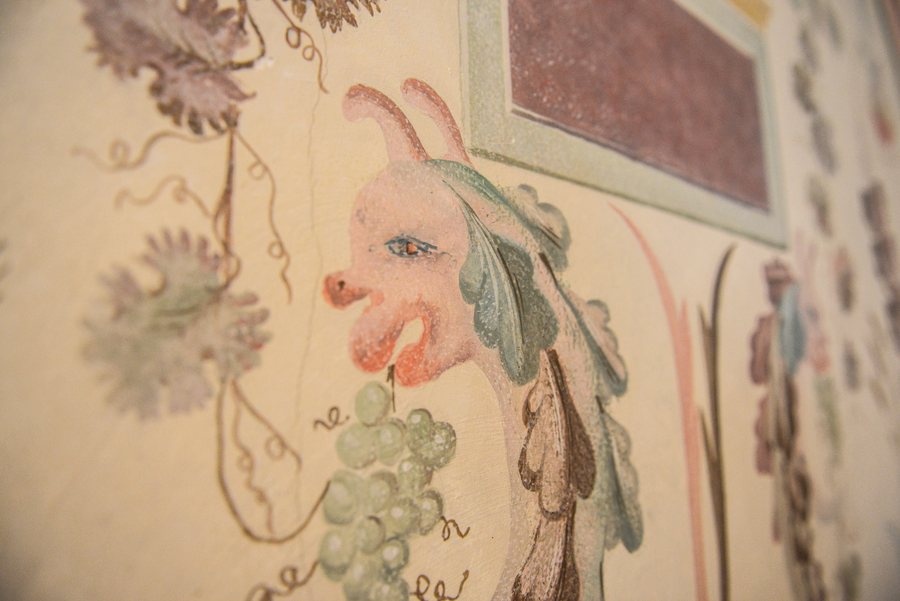 Polichromia w Pałacu Ossolińskich w Sterdyni
Photo: EmiliaKrasińska via Wikimedia Commons, CC BY-SA 4.0
Polichromia w Pałacu Ossolińskich w Sterdyni
Photo: EmiliaKrasińska via Wikimedia Commons, CC BY-SA 4.0
Church and Palace History
The parish church of St. Anne was built between 1779 and 1783 in the late Baroque style. Its main altar is decorated with sculptures of Saints Joseph, Matthew, Jude Thaddeus and James the Greater. The period of construction and the furnishings appeal to different interests: the late Baroque style places the church within an architectural era, while the four named saints give specific religious motifs to the main altar. If you are interested in church architecture and sacred imagery, this combination offers two clear points of interest.
The palace and park complex in Sterdyń dates from the turn of the 17th and 18th centuries. The former Baroque residence was extended and remodelled in the early 19th century to a design by Jakub Kubicki for Stanisław Ossoliński. The Ossoliński Palace dates from the 18th century and was extensively remodelled in the 19th century. Taken together, the history of the palace buildings spans the turn of the 17th and 18th centuries through to changes in the 19th century.
Roadside Shrines and Places of Remembrance
Two roadside shrines draw attention to different religious depictions. In Sterdyń, a roadside shrine dating from the late 18th century features a sculpture of St. Florian. Another roadside shrine was made in 1856 and bears a figure of the Immaculate Conception of Mary. The figures depicted and their dates offer two specific points of interest for cultural history: the imagery itself and a comparison between a period and an exact year.
The monuments also highlight different aspects of history. A monument erected in 1963 commemorates the emancipation of the peasants by the National Government in 1863; it was erected on the centenary. Another monument is dedicated to the soldiers of the Home Army and consists of a large granite boulder. This distinguishes a monument relating to a specific event from a dedication to a particular group of soldiers.
A memorial stone with a plaque in a green space on Tadeusza Kościuszki Street commemorates eleven residents of Paulinów and Stary Ratyniec. They were murdered during the war for rescuing Jewish people.
Cultural History as a Guide to Choosing a Destination
This gives Sterdyń a clear cultural focus as a destination: it combines sacred architecture and imagery with palace history and several forms of remembrance. You can start your hotel search by asking whether these themes fit the kind of trip to Poland you want.
Discover More Destinations
Discover more destinations: Sokołów Podlaski, Krzemień-Wieś, Wyszomierz, Debe
Back to the main travel overview: Sokołowski.

