
Sochaczew: Castle, museums and history
Accommodation in Sochaczew
Sochaczew offers a glimpse of two distinct layers of Polish history: the medieval castle and its significance for Masovian law, and traces of the fortifications from the Second World War. There is also a narrow-gauge railway museum and a short cycling route. This combination gives you different ways to explore the city if you want to combine cultural history with an active exploration on your trip.
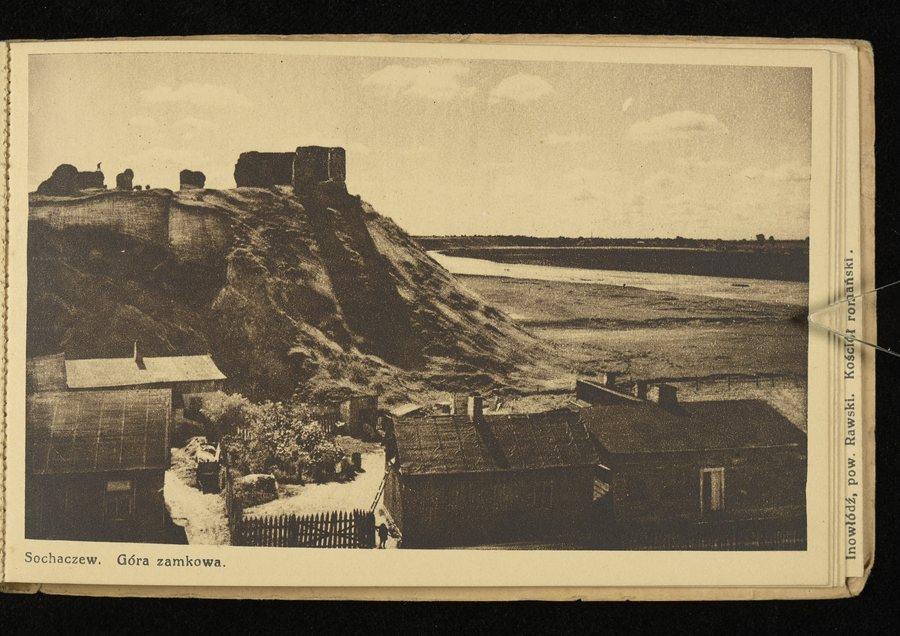 File:Sochaczew - gora zamkowa - Pologne - Sochaczew - ruines du chateau. 1929
Photo: Unknown author Unknown author via Source, Public domain
Castle, architectural history and Masovian law
Sochaczew Castle stands on a hill on the right bank of the Bzura River. Around the middle of the 14th century, Duke Siemowit III had a brick castle built on the hill in the Gothic style. “Brick” describes the construction method, while “Gothic” identifies the style; both details help place the building more precisely in its historical context. The castle ruins are considered Sochaczew’s oldest monument.
Another precise date is 1377: the Masovian Statutes were adopted at a gathering of dukes in the castle. They are considered the oldest written collection of Masovian law. Thus, architectural history and legal history stand side by side: construction is dated to the middle of the 14th century, while the gathering of dukes marks a later, precisely dated moment. The Statutes are a distinct historical point of reference alongside the architecture.
Museums and exhibition
You can visit the Narrow Gauge Railway Museum in Sochaczew. It was officially opened on September 6, 1986; check the latest visitor information before your visit.
The Museum of the Sochaczew Region and the Battle of the Bzura is also located in Sochaczew. A new exhibition with display cases was created in 2024 in Schron Regelbau 701 on ul. Kątowa. The years refer to different things: 1986 marks the official opening of the Narrow Gauge Railway Museum, while 2024 marks the creation of the exhibition. This distinguishes museum and exhibition dates from the city’s older historical references.
Marked trail and cycling route
The marked trail following the traces of the fortifications from the Second World War is 17 kilometers long and runs through both sides of the city. You can explore it in full or in shorter stages. The trail was created in 2024; before setting out, check whether its route has changed before relying on the current markings.
For cyclists, a short cycling route starts at Plac Kościuszki. This gives you different options: a marked trail with a stated length and the option to cover it in stages, and a short cycling route with a named starting point. Which one best suits your stay depends on whether you are more interested in the fortifications or a bike ride.
Nearby, in Plecewice, kayaks are available at Moto Przystań for continuing along the Szlak Jagiełły on the water. Check availability before your visit, as it may change. This option adds a water-based activity to the area’s history, without making it equivalent to the routes in Sochaczew.
Discover more destinations: Teresin, Nowe Gnatowice, Brochów, Rybno.
Go to the main travel overview: Sochaczew County.

