
Discover Baniocha: History and Landscape
Accommodation in Baniocha
Baniocha brings together local church history, memories of the Second World War, historic buildings and a landscape whose clay pits are linked to brickmaking. Nearby, the Chojnów Cycling Trail adds a specific cycling route to these themes. Together, they offer several different perspectives on the town and its history.
Church history and remembrance
On 20 September 1952, Stefan Wyszyński established the parish of Najświętszej Maryi Panny Królowej Pokoju and sent its first parish priest, Stanisław Kowalski, to Baniocha. The date and the appointment of the first parish priest together mark the beginning of this church history in Baniocha.
Another period in the town’s history concerns the night of 16–17 April 1944, when four Polish Cichociemni parachuted into the area above Baniocha. The monument on Wiejska Street commemorates the “Weller 12” air operation. At its unveiling in 2017, Major Aleksander Tarnawski was the last surviving Cichociemny. The event and the memorial belong to two different points in time: the parachute drop took place in 1944, and the memorial was unveiled in 2017.
Historic buildings and heritage protection
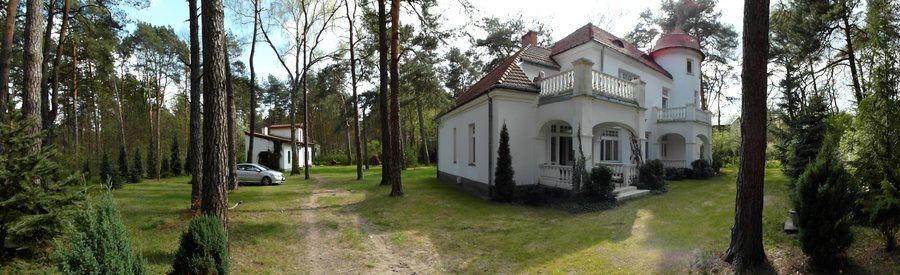
A villa and its plot date from 1895–1896. On 21 October 1991, the property was entered in the heritage register under number A-1498. The manor house in Baniocha dates from the 1920s and is now used as a kindergarten. The villa and manor house therefore represent two different building periods: the late 19th century and the 1920s. A park in Baniocha is also listed in the voivodeship heritage register.
Clay pits and the history of brickmaking
A historical account attributes Baniocha’s numerous clay pits to the operation of the Feniks, Rozalin and Marki Grójeckie brickworks. At the turn of the 19th and 20th centuries, these brickworks were among the most important suppliers of bricks to Warsaw and its southern outskirts. The history of brick production therefore extends beyond the town: the clay pits were in Baniocha, while the brick supply also served Warsaw and the southern outskirts. If you are interested in how the local landscape came about, you can consider the clay pits in the context of this regionally significant production. This industrial history adds an economic perspective to the church and architectural themes.
Cycling in the surrounding area
The 24 km Chojnów Cycling Trail runs near Baniocha. It is a main cycling route through the Chojnów Forests and part of the cycling routes of Kraina Jeziorki. Its length and links to these two cycling networks provide practical details for planning your ride. You can consider the trail as a separate perspective alongside the town’s historical themes. Check the current condition of the route before setting out.
Discover more destinations
Discover more destinations: Kamionka, Many, Bobrowiec, Tarczyn, Zalesie Górne, Mroków, Nowa Wola, Chojnów.
For the broader travel overview: Piaseczyński.

