
Płock: the Vistula, Sobótka and historic culture
Accommodation in Płock
Płock stands on a steep, 52-meter-high escarpment known as Wzgórze Tumskie. At this point, the Vistula is almost 1.5 kilometers wide. The view of the landscape is shaped by two striking features: the elevated terrain and the broad river. If you are considering what to experience in Płock, these geographical features provide a starting point for exploring the city.
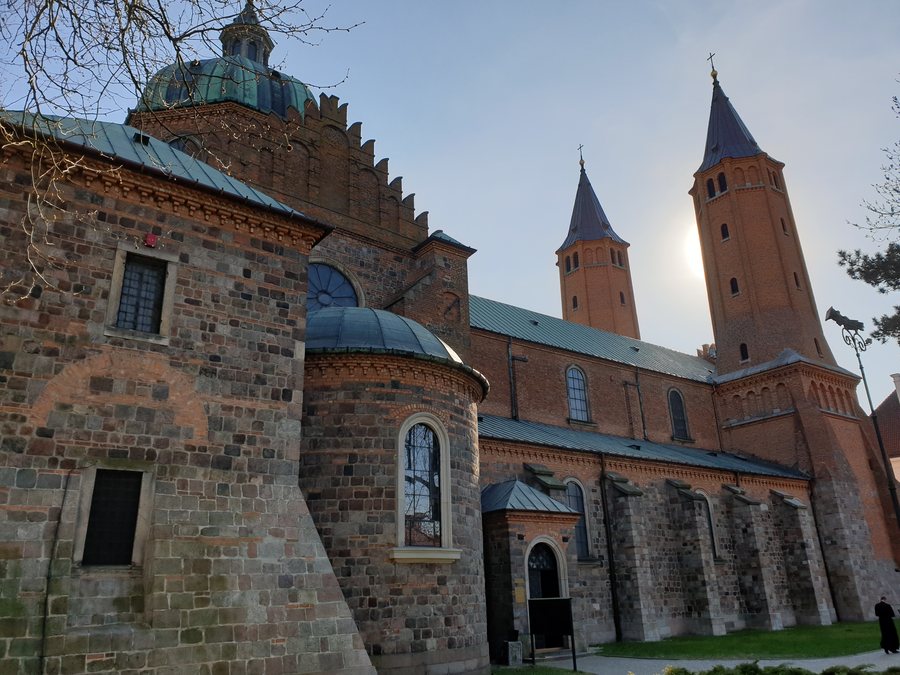 Exterior of the Płock Cathedral, Poland, April 2019
Photo: MichalPL via Wikimedia Commons, CC BY-SA 4.0
The Vistula Riverfront and Sobótka
Zalew Sobótka is an oxbow lake of the Vistula, right by the riverbank. The Sobótka Reservoir area also includes an oxbow lake on the riverbank; there is clean water and a sandy beach there. The beach has a beach volleyball court, a children’s slide, and kayak and pedal boat rentals. This makes water and outdoor activities distinct themes for your plans alongside the historic sites.
Cycling and walking paths run around Zalew Sobótka and are a popular training spot for runners. Every September, the Polish Rowing Sprint Championships and the J. Kawiecki Memorial take place there. The paths, beach and annual sporting events give the area different points of interest, which you can consider separately rather than combining them into a single activity.
Routes and Notable Structures
For a walk on Wzgórze Tumskie, there is a route of about five kilometers from the zoo to the park behind the Dom Technika. It is an alternative to the paths around Zalew Sobótka: you can choose your route based on its respective starting and ending points. There is also a 358-meter-long promenade pier on the Vistula. Built in 2010, it is considered the only structure of its kind in Poland.
The tourist miniature railway also follows a set route through Płock. It starts at the zoo and travels to the riverfront, the landing stage, the pier, Sobótka beach and the Old Market Square. It operates seasonally, so check the timetable before your trip.
The Cathedral, Museum and Chopin in Sanniki
Beneath the north tower of Płock Cathedral, the Royal Chapel contains a sarcophagus holding the remains of Polish rulers Władysław Herman and Bolesław Krzywousty. The Diocesan Museum is one of Poland’s oldest church museums. It was founded in 1903 at the initiative of the priest A. J. Nowowiejski. Both sites provide a tangible connection between Płock’s history and the people and institutions associated with the city.
Chopin is at the heart of Sanniki’s own historical and musical story. In the summer of 1828, the then 18-year-old Fryderyk Chopin stayed at the Chopin Palace and Park Complex as a guest of the Pruszak estate-owning family, who were friends with his parents. Chopin concerts have been held in Sanniki since 1981, accompanied by recitations of Polish poetry. In February and October, they take place on Sundays close to Chopin’s birth and death anniversaries; in the other months, they are held on the first Sunday of each month.
Nature in the Wider Travel Area
West of Płock, the Skrwa River flows through Brudzeński Landscape Park. The picturesque gorges offer opportunities for canoeing, and the Płock stage of the Poland Bike Marathon also passes through the area. Another regional stop is the open-air museum of Vistula settlement history in Wiączemin Polski, less than 30 kilometers from Płock. Visitors can also see the Powidlarnię there.
The wider travel area also includes Gostynińsko-Włocławski Landscape Park, where forests cover more than 63 percent of the park. It extends across areas in the municipalities of Włocławek, Kowal, Baruchowo, Nowy Duninów, Gostynin and Łąck. This lets you distinguish between Płock’s river and city attractions and a broader landscape experience when planning your trip.
Discover More Destinations
Discover more destinations: Płock, Dobrzyków, Rydzyna, Kozłowo, Grabina, Cekanowo, Łąck, Wola Łącka, Cierszewo, Maszewo Duże, Słupno, Rogozino, Wyszogród, Koszelówka.
To the wider travel guide: Masovia.

