
Czerwińsk nad Wisłą: Abbey History and Vistula Views
Accommodation in Czerwińsk nad Wisłą
If you are considering Czerwińsk nad Wisłą as a destination for a trip to Poland, cultural and historical landmarks meet scenic highlights here. The former abbey of the Canons Regular is an important point of reference for history, architecture, and fine art; two stone obelisks on Plac Batorego commemorate Polish history. From the monastery courtyard, the view stretches across the Vistula to the distant Puszcza Kampinoska. These different features can help you assess the town according to the themes that matter to your travel plans.
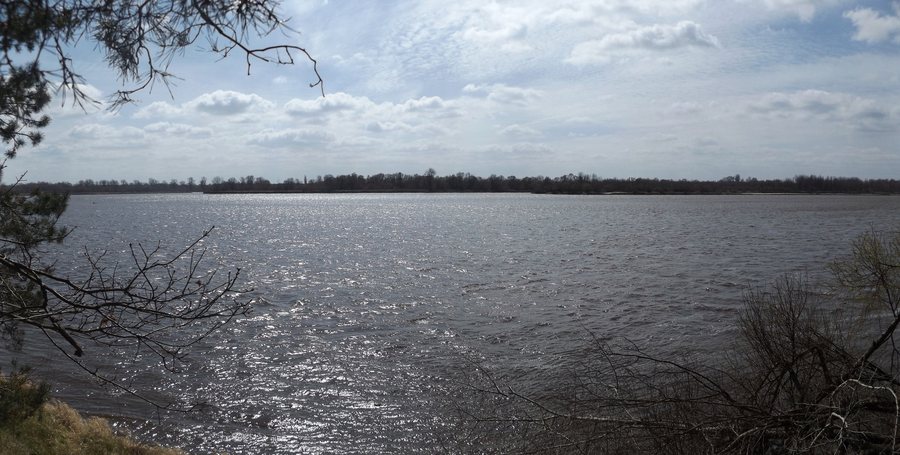 File:Wisła widoczna z nadrzecznej polany śródleśnej, u krańca wąwozu między dawnymi cmentarzami, w lesie w Woli (gmina Czerwińsk nad Wisłą) w 2015 r.jpg
Photo: Photo: VVerka5
File:Wisła widoczna z nadrzecznej polany śródleśnej, u krańca wąwozu między dawnymi cmentarzami, w lesie w Woli (gmina Czerwińsk nad Wisłą) w 2015 r.jpg
Photo: Photo: VVerka5
Abbey history and Romanesque art
The former abbey is considered one of the oldest and most valuable monastic complexes. It holds an important place in the history of Poland and in Romanesque architecture and fine art. In 2021, it was recognized as a Polish Historic Monument. This combination offers useful context for your choice: its significance encompasses both the complex's historical importance and its standing in Romanesque architecture and art. The abbey thus brings together several cultural and historical perspectives in one place. If you are specifically looking for monastic history or Romanesque art on a trip to Poland, these highlights offer a concrete reason to learn more about Czerwińsk nad Wisłą.
The monastery museum and its themes
A 2012 travel account mentions collections on the history of the Abbey of Czerwińsk at the monastery museum, as well as an exhibition about Salesian missions. The two subjects complement each other without being conflated: one leads to the abbey's history, the other to Salesian missions. This means the cultural profile extends beyond architecture and art. If you consider collections and exhibitions as travel interests, you will also find specifically described perspectives here on the abbey and the missions.
Memorials on Plac Batorego
Two stone obelisks stand on Plac Batorego. One commemorates the thousandth anniversary of the Polish state, while the other marks the crossing by the army of King Władysław Jagiełło. The two occasions commemorate different aspects of Polish history: a state anniversary and an event associated with a king and his army. The obelisks therefore add a different form of remembrance to the abbey. For orientation, these points of reference can be considered separately: the complex represents monastic history and art, while the obelisks commemorate two specific historical events.
Panoramic views from the monastery courtyard
The view from the monastery courtyard offers a distinct perspective on the town. From there, you can see the broad expanse of the Vistula, with the distant Puszcza Kampinoska beyond it. The forest is thus far away, beyond the river, and forms the backdrop to the landscape. This impression differs from the cultural and historical themes of the abbey and the obelisks. If you would like to consider scenery as well as history when choosing a destination, the described view offers a concrete point of reference: the breadth of the Vistula and the woodland beyond it together define the panorama.
Discover more destinations: Płońsk, Przepitki, Władysławowo, Wycinki, Galominek Nowy, Słoszewo, Dłużniewo, Drożdżyn
For the broader travel overview: Płoński.
