
Lelis
Accommodation in Lelis
For your travel planning, you can explore Lelis through three distinct cultural themes: the daily life of the residents of the Puszcza Kurpiowska, a wooden church relocated in a specific year, and a festival of regional music. Each offers a different perspective and can help you understand the place according to your interest in everyday culture, architectural history or music.
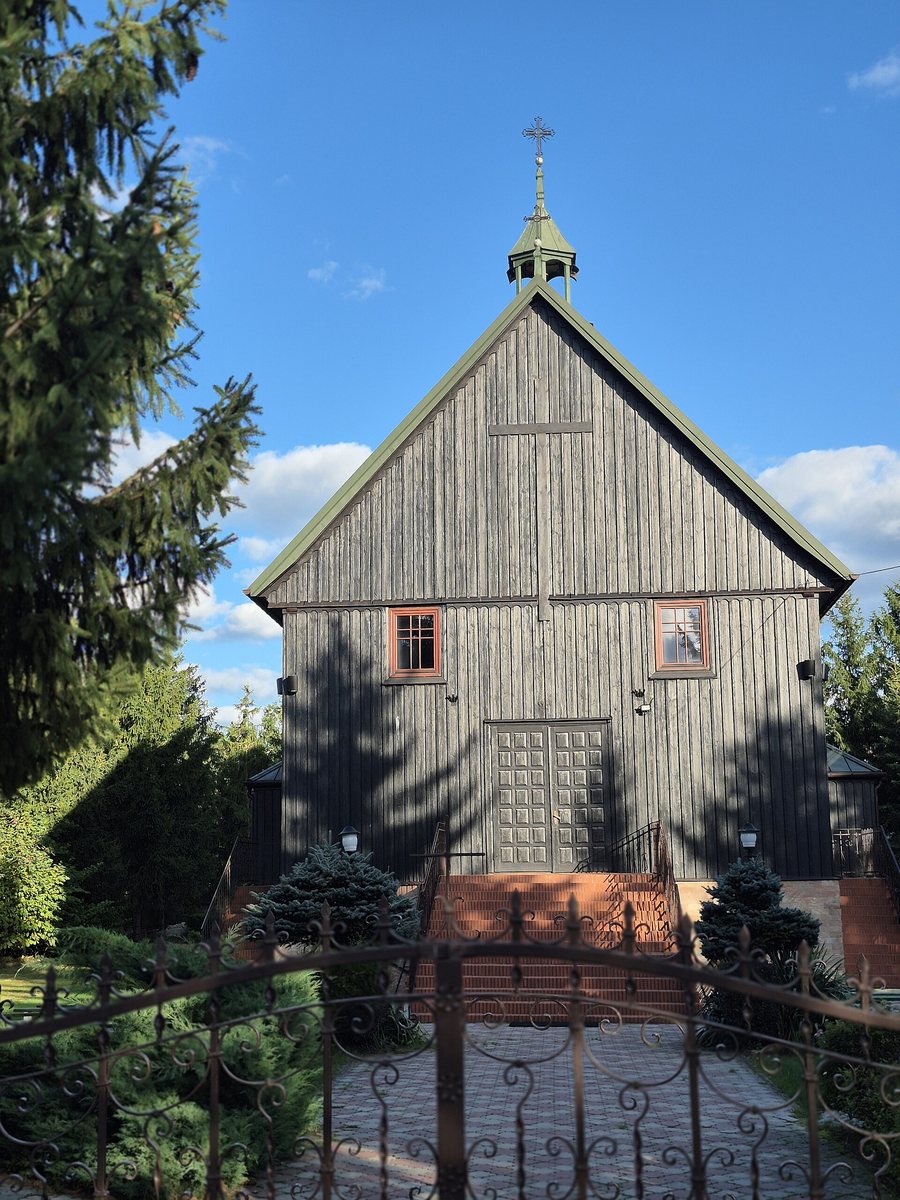 File:Drewniany Kościół Parafia Matki Bożej Nieustającej Pomocy w Lelisie.jpg
Photo: Aleksandra Domurad via Source, CC BY 4.0
Everyday life in the Puszcza Kurpiowska
The Ośrodek Etnograficzny ethnographic center in Lelis was founded in 1997 and presents the daily life of the residents of the Puszcza Kurpiowska. Two rooms are furnished in the style of a traditional Kurpie house. In this way, the center combines a depiction of daily life with a specific domestic setting. The rooms provide a distinct framework for this perspective, while the focus also extends beyond the furnishings of a single house.
Exhibition topics include pottery, looms, willow weaving, and agricultural and hunting tools. Comparing these items draws attention to different fields of activity: looms and willow weaving represent distinct craft traditions, while the tools relate to other areas, including agriculture and hunting. This means you can view the exhibits not only individually, but also by considering which aspects of everyday life they represent.
The rooms and individual objects offer two perspectives: on the one hand, the traditional house as a setting is central; on the other, various types of work and tools are presented. This combination provides a specific point of reference if you are interested in the everyday culture of the Puszcza Kurpiowska.
Before visiting, check the center’s current visitor information.
Wooden church and architectural history
The Church of Matki Bożej Nieustającej Pomocy in Lelis is a wooden church; it was relocated to Lelis in 1989. The year refers to the relocation and places this historical change in context. The church adds a different cultural point of reference to the ethnographic center: the center focuses on everyday life and exhibits, while the church is a specific wooden structure with a history tied to its location. The two themes are therefore clearly distinct: ethnographic presentation and wooden architecture.
Regional music and travel planning
Kurpiowskie Granie is a regional music festival in Lelis. This adds a musical focus to the ethnographic displays and the wooden church. If music is important to your stay, the festival may be a reason to plan a visit to Lelis specifically.
When planning your dates, it is useful to distinguish between historical years and an event date: the center was founded in 1997, and the church was relocated in 1989. Both dates refer to past events. For Kurpiowskie Granie, by contrast, the specific date is what matters for your trip. If you want to plan your stay around the festival, check in advance when it takes place.
Discover more destinations: Szkwa, Zamość, Olszewo-Borki, Myszyniec, Wydmusy, Kamianka, Ostrołęka, Łodziska.
Return to the regional travel overview: Ostrołęcki.

