
Lesznowola: Manor house and park complex and historical traces
Accommodation in Lesznowola
In Lesznowola, a listed manor house and park complex, with a manor house, park and pond, shapes the town’s historical character. This provides a specific cultural reference when choosing a destination: rather than a general historical theme, the focus is on individual parts of a complex. The manor house, park and pond each offer different points of reference for understanding the place.
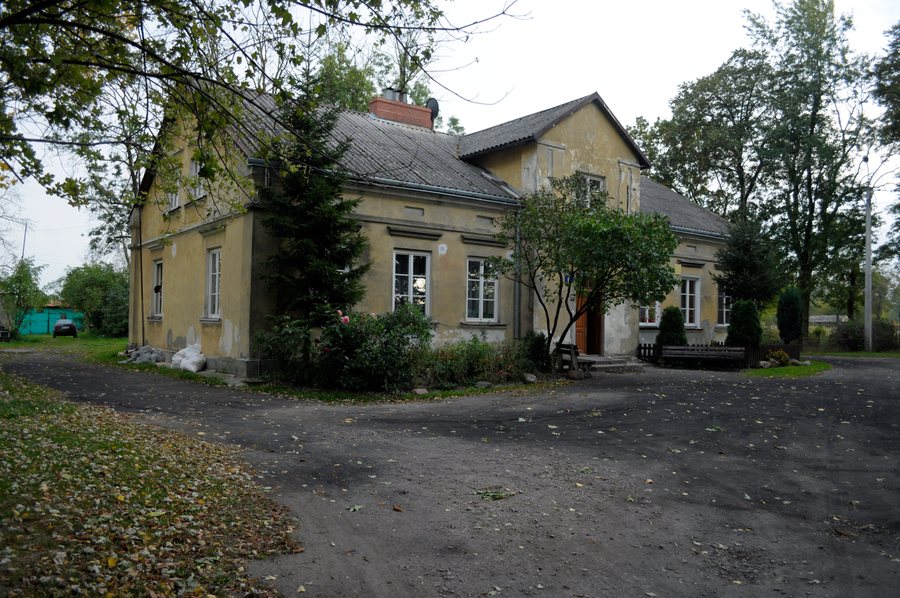
The manor house, park and historical details
The manor park in Lesznowola dates from the second half of the 18th century, while the manor house was built in the mid-19th century. The park is therefore older than the manor house. This comparison of dates makes the complex especially interesting if you want to explore both architecture and designed outdoor spaces at a destination.
A historic wayside shrine stands in the park of the manor house and park complex. A large, brick-built Marian shrine in Lesznowola dates from 1891. Specific building details and dates like these make the historical theme tangible: the place can be described not only through its manor house, but also through its religious shrines.
This provides a clear cultural focus for planning your trip. If you enjoy getting to know Polish places through their architectural history, the manor house and park complex and the shrines in Lesznowola offer specific topics to explore. Comparing their dates also helps distinguish the individual historic features: the park dates back to the second half of the 18th century, the manor house was built in the mid-19th century, and the Marian shrine dates from 1891.
Grójec: more culture and history
The wider destination of Grójec is home to other historic and cultural sites. The Church of St. Nicholas in Grójec has a wooden bell tower dating from 1889. The church also houses a baptismal font dated 1482, where Fr. Piotr Skarga was baptized. Another cultural detail is the mural “Panorama of Grójec 1867”: Sebastian Krawczak drew it in pencil, and it covers an area of 85 m².
The town’s history is also reflected in different places. The former narrow-gauge railway station in Grójec underwent extensive revitalization in 2024–2025 and was converted into a branch of the Grójecki Ośrodek Kultury, with cultural and recreational functions. The revitalized town park in Grójec is a green space for seniors, families with children, young people, athletes and people with dogs. The Grójecki Ośrodek Kultury is also the main organizer of the annual Święto Kwitnących Jabłoni.
Historic memorial sites in Grójec include fragments of gravestones and a monument to the Jews murdered during the Second World War in the Jewish cemetery. The Roman Catholic cemetery on Mszczonowska Street is home to the Makowski Chapel, built in 1851. The Evangelical cemetery is protected along with its layout and gravestones. These examples give the wider destination a broad historical context, distinct from the specific traces found in Lesznowola.
If you want to include a marked route alongside cultural attractions, Grójec has the black Szlak do Grójca trail. The 17 km route connects Jeziorka, Grójec and Kośmin and serves as a link to the Modrzewina Nature Reserve. Grójec lies on the Molnica River. This wider destination therefore offers both cultural and historical themes and a clearly named route to help you find your way.
Discover more destinations: Chynowie, Grójec, Wola Kukalska, Budki Petrykowskie, Borowe, Warka, Nowe Miasto nad Pilicą, Michalczew.
Back to the wider travel overview: Grójec.

