
Discover Bełżyce: History and Culture
Accommodation in Bełżyce
For your trip to Poland, Bełżyce can be understood through several specific cultural and historical points of reference. Remains of a 15th-century castle and a 19th-century manor house and park complex have survived. Other points of interest include a mound raised by local residents, a church linked to a named route, and a Jewish cemetery. These themes draw attention to different aspects of the town’s history: its architectural heritage, a cultural route, and the memory of the former Jewish community. If you would like to consider historical places when choosing a destination, Bełżyce offers several different starting points.
Historical Traces in Comparison
The castle remains date back to the 15th century, while the surviving manor house and park complex is from the 19th century. These dates provide a clear sense of chronology, while the names refer to different forms of architectural heritage. Comparing them helps show that Bełżyce cannot be reduced to a single period: the castle remains and the later manor house and park complex represent different historical points of reference. When planning your trip, you can use these as a guide if you want to consider which periods and types of sites a place makes visible.
The Kościuszko Mound
The Kościuszko Mound is a memorial site with a precisely recorded date. Local residents raised the mound in 1905 opposite the entrance. Its name, year, and the recorded role of the residents make this point particularly specific: alongside the surviving sites, you will find a mound with a clearly documented history. Its significance lies not only in the date, but also in who built it. In this way, the mound adds a local act from 1905 to the architectural points of reference dated to particular periods.
The Church and Cultural Route
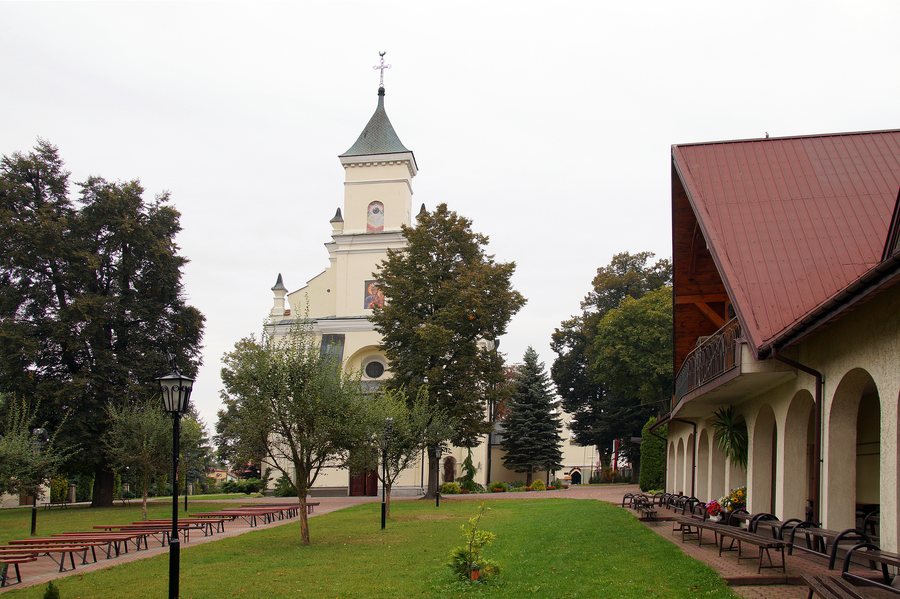
The Church of the Conversion of St Paul (pw. Nawrócenia św. Pawła) in Bełżyce is part of the Szlak Renesansu Lubelskiego (Lublin Renaissance Route). This route connection provides a separate point of reference for planning a cultural trip: it links the church to a named route. This differs from the dates associated with the castle remains and the manor house and park complex. If you compare destinations by their cultural connections, you can focus here on the church’s place on a route rather than asking only how old a building is. The name of the church and that of the Szlak Renesansu Lubelskiego are the specific points of reference.
The History of the Jewish Community
The 19th-century Jewish cemetery commemorates Bełżyce’s former Jewish community. On the cemetery wall, there is a brief history of the community and a relief bearing Polish and Hebrew text. The historic cemetery, the remembrance of the community, and the relief in its two languages are connected, though they do not necessarily serve the same purpose: the cemetery is the point of reference, the brief history recounts the community’s story, and the relief bears Polish and Hebrew text. These aspects give Jewish history a distinct place among Bełżyce’s cultural and historical themes.
Considering Bełżyce for Your Trip
Which aspect matters most to you depends on what you look for in a cultural trip: the dates of architectural sites, the church’s connection to a route, or the history of the former Jewish community. The Kościuszko Mound adds another perspective: a memorial site raised by local residents in 1905. These differences can help you decide whether to consider Bełżyce more closely as a destination for your trip to Poland.
Discover more destinations: Stasin, Rudka Kozłowiecka, Bronice-Kolonia, Radawczyk, Motycz, Ciecierzyn, Piotrowice-Kolonia, Wólka
Back to the main travel overview: Powiat Lubelski.

