
Modliborzyce: Architectural History and Market Square
Accommodation in Modliborzyce
Modliborzyce offers tangible points of interest for travelers interested in cultural history: a parish church with a dated construction period, a synagogue whose history has been shaped by destruction and restoration, and a centrally located market square. Surviving brick buildings and wooden houses complete this picture. This raises different questions as you plan your trip: would you like to put construction dates and historical turning points into context, or are you mainly interested in how the town center is laid out and which older building styles have survived?
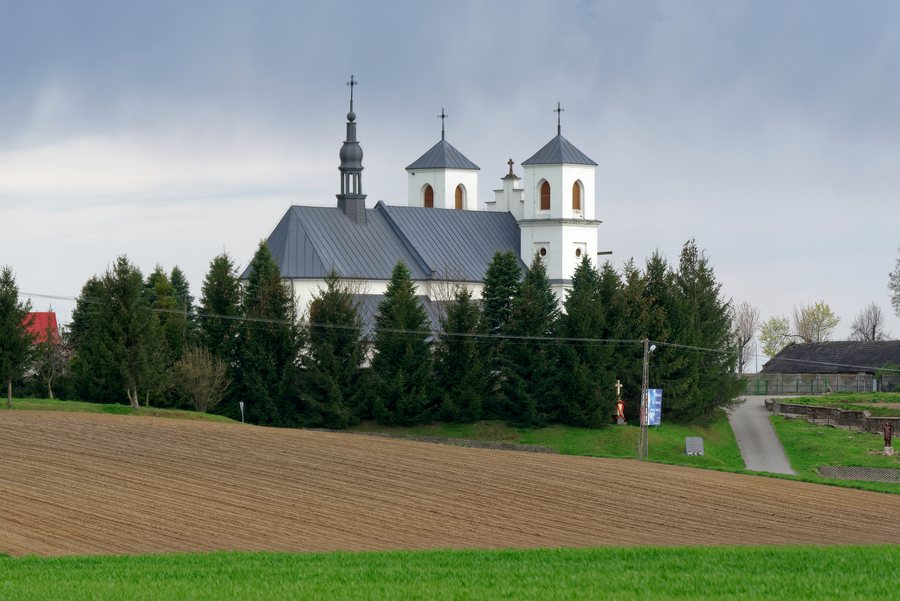 File:Kościół w Modliborzycach, 20210507 1814 6602.jpg
Photo: Jakub Hałun via Wikimedia Commons, CC BY-SA 4.0
Church and Synagogue: Two Timelines
Construction of the parish church of Saint Stanislaus, Bishop and Martyr, lasted from 1644 to 1664. That is a period of two decades that can be defined as a clear timeframe: the church was not built in a single year, but over a longer construction phase. For travelers who want to place historic buildings in their chronology, this span provides a concrete point of reference. The dedication is also specified, making clear which saint the parish church is dedicated to.
The synagogue was built around 1760—approximately a century after construction of the parish church ended. Its history includes two further significant dates: it was devastated during the Second World War and restored from 1957 to 1965. Construction, devastation and restoration are distinct stages; the restoration period lasted eight years. If you look at the town’s history through its timelines, you can consider this sequence alongside the construction history of the parish church without combining the two buildings into a single narrative.
The Market Square as a Point of Reference
The market square is in the center of Modliborzyce. Streets branch off from its corners. This describes not only its central location, but also a specific feature of the town plan: the square forms the center, with streets beginning at its corners. If you are interested in how a town is laid out, this structure offers a clear question to consider when planning your trip: how is the center organized, and how do the streets extend from this focal point? This is a different way of approaching local history than looking at individual construction dates.
Surviving Houses and Architectural Styles
Old brick buildings and wooden houses have survived; the buildings date approximately to the 20th century. Brickwork and wood offer two different material points of reference as you look at the historic houses. Together with the religious buildings, they broaden the picture of Modliborzyce: alongside dated construction and restoration phases are surviving buildings and their different building methods.
Two useful areas of focus emerge for your interest in history and the town’s character. If you enjoy comparing timelines, the parish church and synagogue offer different construction and restoration dates. If you are more interested in the layout of the center and surviving architectural styles, the market square and the contrast between brick and wood take center stage. This distinction helps you explore Modliborzyce through specific themes and decide which aspects matter to you during your stay.
Discover more destinations: Janów Lubelski, Wierzchowiska Drugie, Potok Wielki, Felinów
Go to the regional travel overview: Janowski.

