
Pieńsk between glassmaking history and townscape
Accommodation in Pieńsk
Pieńsk: a townscape shaped by rural settlement and industrial history
Pieńsk is an industrial town that developed from a rural settlement. These different origins are reflected in its hybrid urban layout: a typical rural pattern runs along Ulica Zgorzelecka, complemented by elements of a factory settlement. If you are interested in how a place has developed, Pieńsk offers more than individual buildings: the blend of different settlement forms is also part of its character.
In the town centre, urban-style buildings are concentrated mainly along K. Świerczewskiego, Dworcowa and Kościuszki streets. The parish Church of Saint Francis of Assisi is also in the centre, with its façade facing K. Świerczewskiego Street. It is an example of Neo-Romanesque architecture. Together, these features give a clear impression of how the central streets and an important building are situated within the townscape.
The church and glassworks: different aspects of the heritage
Particularly striking is the now-disused Lucyna glassworks complex, Nysa plant, at 44 H. Dąbrowskiego Street. Its surviving buildings are distinguished by characteristic Neo-Gothic forms and façades of red and yellow facing bricks. Most were built between 1900 and 1925. The complex comprises more than 30 structures, almost all of which are protected by their inclusion in the register of monuments. It is considered a well-preserved architectural ensemble that is significant to the townscape.
Pieńsk’s glassmaking history extends beyond this complex. The ŁUŻYCE glassworks was founded in 1872 and produced optical glass, pressed glass and bottle glass. If you want to understand the town’s industrial history, these offer two different perspectives: the establishment of a glassworks in the 19th century and the surviving architecture of the later Lucyna complex. These are separate details about the town’s history, not a claim that the two names refer to the same business.
A cross-border event
The annual “Szczodry Wieczór” takes place at Dom Kultury. At this cross-border event, Polish, German and Czech participants exchange Christmas traditions and celebrate together. It adds a cultural dimension to a stay if you are interested in local traditions and encounters across national borders. As the annual event takes place on a specific date, check the latest event information when planning your visit.
Cycling route and crossing over the Lusatian Neisse
The green cycling route starts in Pieńsk and is about 19 kilometres long. This approximate distance gives you an initial idea of the route’s length; by itself, it says nothing about the time needed or the level of difficulty. As signage or the route may change, check the route information before setting out. This lets you plan your ride based on the available route details without assuming a particular duration.
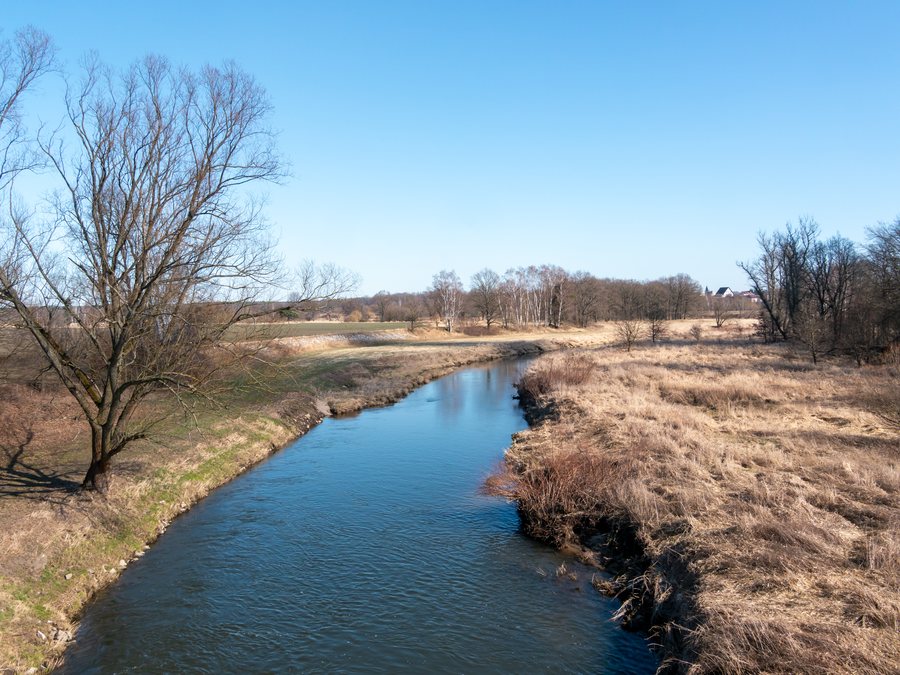
A foot and cycle bridge over the Lusatian Neisse connects Pieńsk with the neighbouring municipality of Neisseaue and the partner town of Rothenburg. It also offers a cross-border option for planning a journey on foot or by bike. The bridge and the green route are two distinct points of reference: the route starts in Pieńsk, while the bridge links the named places across the river.
When choosing where to stay in Pieńsk, your interests may be the deciding factor: the town layout and church architecture, the history of the glass industry, cycling or visiting during the annual festival. If you are looking for hotels in Pieńsk, it helps to first decide which of these aspects of the town matters most for your trip.
More destinations
Bierna, Zgorzelec, Bogatynia, Jędrzychowice, Dłużyna Dolna, Ruszów, Trójca, Sławnikowice
For the overview of the wider area: Zgorzelecki.

.jpg)