
Żerniki Wrocławskie: Park, Church and Local Insights
Accommodation in Żerniki Wrocławskie
Get to know Żerniki Wrocławskie through specific cultural and local features: its 19th-century palace park, a half-timbered church with artistic details, and activities with set audiences and dates. There is also a self-service bicycle rental station at the bus turning area and a local game specialty. These features can help you decide whether the place suits the interests shaping your trip to Poland.
19th-Century Palace Park
The palace park in Żerniki Wrocławskie dates from the third quarter of the 19th century and is classified as a naturalistic park. Both its historical classification and its park type are therefore central to choosing what to see here. Anyone interested in historic parks will find a specific point of reference here; those who explore culture mainly through buildings and art can consider the local church as a different subject.
The two features can also be distinguished by period: the park dates to the third quarter of the 19th century, while the church is from the early 20th century. These differences give your plans a clear thematic framework without reducing the history of the place to a single era.
Half-Timbered Church and Artistic Details
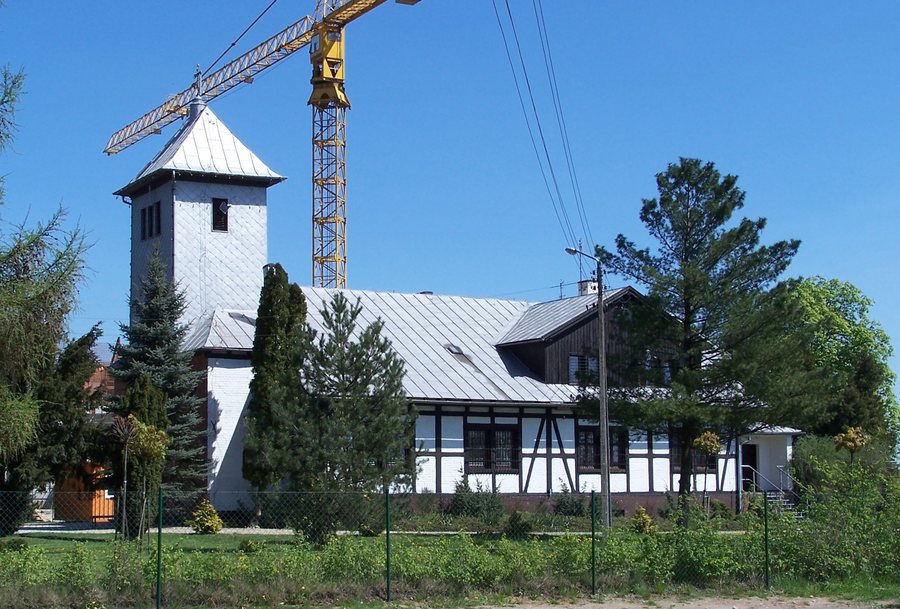
The Church of the Sacred Heart of Jesus (Kościół Najświętszego Serca Pana Jezusa) has a rectangular floor plan and was built using half-timbered construction. Above its entrance is a relief of the Good Shepherd dating from 1930. These details offer different perspectives for understanding its cultural history: the floor plan and construction describe the architecture, while the dated relief identifies a specific artistic feature.
The church also features polychrome decoration painted by the Poznań artist Edmund Szyfter in the early 1960s. This reveals a longer timeline at the same church: the early-20th-century construction was followed by the 1930 relief and, later, the painted decoration. If art and architecture are important considerations when choosing a destination, these distinct layers of history provide a specific reason to consider Żerniki Wrocławskie.
Cultural Programme for Specific Audiences
During the 2026/2027 school year, Klub Kuźnia offers free yoga classes for adults aged 60 and over on Mondays from 08:45 to 10:15. Registration is required; the schedule may change. If you would like to plan your stay around this activity, check the programme in advance and take note of the stated age group and registration requirement.
Also during the 2026/2027 school year, Klub Kuźnia has workshops in acrylic painting on its programme. They are for children up to eight years old, young people and adults; registration is required to take part. This schedule may also change. The different audiences and formats can help you assess the activities according to your own interests rather than treating them as a single, uniform cultural programme.
Bicycle Rental and a Local Specialty
There is a self-service bicycle rental station at the bus turning area. The stations are paved and equipped with bicycle racks and information panels. The bus turning area is therefore a specific landmark if you would like to include the bicycle rental facility in your plans. Bicycle rental is a self-service option.
Karczma Paśnik in Żerniki Wrocławskie is known for game as a specialty; the game has been awarded the “Produkt Lokalny LIDER A4” certificate. This adds a specific culinary connection to the cultural and park-related features. If you are considering Żerniki Wrocławskie as a destination for your trip to Poland, the park, church, scheduled activities and local specialty can together help you decide what to focus on during your stay.
For the broader travel overview: Wrocław.

