
Altheide-Bad: Park, mineral water and trails
Accommodation in Altheide-Bad
Altheide-Bad (Polanica-Zdrój) offers several starting points for planning your trip: park promenades, mineral water, a hiking trail, an XCO mountain bike course and a museum. These themes differ not only in their content, but also in whether you are interested in the history of buildings and collections or want to focus on a specific route to explore on foot or by bike.
Park promenades and Wielka Pieniawa
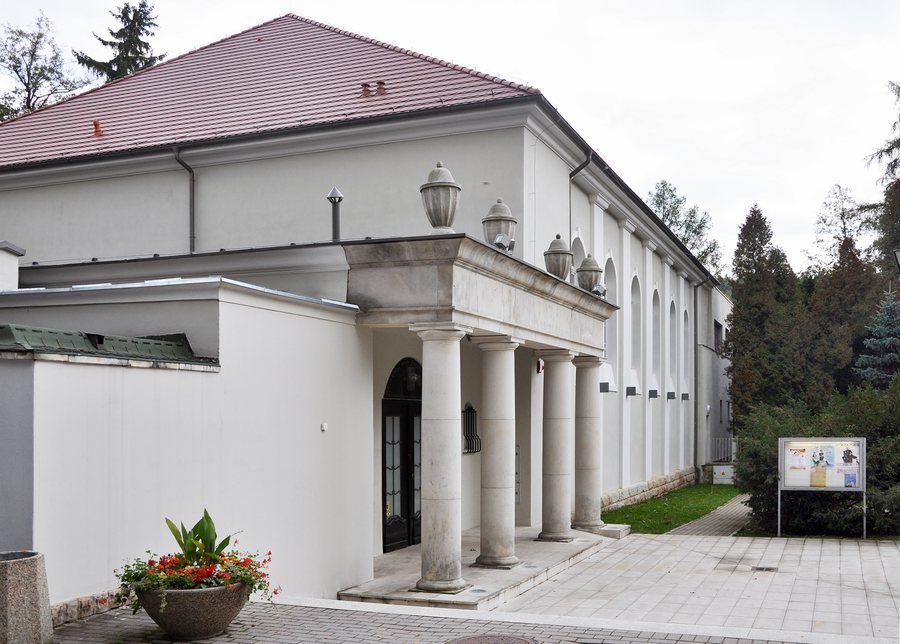
Zdrojowy Park was laid out in 1906. Its promenades lead to the forests and mountains. This connects the park to a wider landscape beyond its grounds: you can focus on the park itself or turn your attention to the forests and mountains reached by its promenades. When choosing where to stay, this offers a different emphasis from a visit focused mainly on the museum or cycling route.
Another distinctive feature is Wielka Pieniawa water. It contains natural carbon dioxide and is available to drink on site at the pump room in Polanica-Zdrój; it is also sold commercially in bottled form. These are two different ways to experience the water: directly at the pump room or as a bottled product. If you plan to visit the pump room, check the latest information about its opening before your trip.
Exploring on foot or by mountain bike
The Leśny Szlak Wspinaczkowy is 6.8 kilometres long; the stated walking time is about two and a half hours. It leads to Piekielna Dolina, with its picturesque steep slopes, rock outcrops and viewpoints. The length and approximate walking time give you two concrete figures to help with planning. The destination adds a sense of what makes the route distinctive in terms of scenery.
A different kind of route can be found at the Cross Country Park in Polanica-Zdrój. The XCO mountain bike course includes technical sections with rock gardens, rocks and tree trunks. It is reserved exclusively for cyclists; pedestrian traffic is prohibited. As route rules may change, check them before riding. Unlike the hiking route, the key details here are not the walking time and destination, but the technical sections and the explicit restriction to cyclists.
Monastery history and collection
The Ethnographic Mission Museum is housed in a 19th-century monastery. In 1927, the building was converted into a mission house. The building’s history and use are therefore specific topics to explore during a visit; they can be considered alongside the collection without conflating the two.
The collection comprises clothing, jewellery, musical instruments, everyday objects and sculptures gathered by missionaries. If you would rather plan your trip around cultural discoveries than a route, this offers a distinct focus: the combination of the monastery building’s history and the collection’s diverse objects.
For finding a hotel, this choice of focus can be a useful first step before you compare individual options.
More destinations
More destinations: Szczytna, Bad Reinerz, Stojków, Nowa Morawa, Lasówka, Kąty Bystrzyckie, Młynowiec and Bad Kudowa.
To the overarching travel guide: Kłodzki.

