
Discover Wojnicz
Accommodation in Wojnicz
Wojnicz brings together several distinct cultural and historical themes: an assembly held in 1239, a documentary reference to it as a town in 1278, the layout of its market square, and the artwork on the high altar of St. Leonard’s Church. There is also the Wojnicz–Panieńska Góra hiking trail, which passes the park and palace complex. These varied points of interest give you more than one perspective on the town as you plan your trip.
History with clearly defined dates
One notable historical date is 1239, when the nobility of Lesser Poland gathered in Wojnicz to welcome Kinga. She was the daughter of the King of Hungary and later became the wife of Bolesław the Chaste. The event connects the town with a specific person and a clearly identified occasion; it should be understood as a single historical event.
By contrast, the exact year when the town itself was established is not known. What is certain is that it happened sometime between 1239 and 1278. A document issued by Duchess Kinga in 1278 refers to Wojnicz as a town. The difference between the precisely dated gathering and the town’s establishment, which can only be placed within a date range, provides a useful thread: individual historical moments are tangible, while the town’s development is situated within this period.
The market square and church art
At the market square, the focus is not on a single event, but on the shape of the urban space. It has well preserved the basic forms characteristic of Środa law and is a monument of exceptional significance. Alongside the events that can be dated from written records, Wojnicz’s surviving urban layout is also a key point of interest. If you like to understand a place through its market square and its layout, you will find a tangible cultural and historical reference point here.
St. Leonard’s Church offers a different perspective on the town’s art history. Its high altar is in the Neo-Renaissance style and dates from the late 19th century. It contains paintings from a Renaissance triptych, painted by Stanisław Tarczowski around 1560. The central panel depicts the Visitation of Saint Elizabeth; the side panels show Saint Helena and Saint Catherine. The altarpiece features an image of Saint Leonard.
The altar and the paintings it contains belong to different periods. This combination makes their dates interesting and gives the high altar a distinct art-historical profile. The subjects also offer a concrete way to engage with the work: you can distinguish between the scene in the central panel, the two figures at the sides, and the image in the altarpiece. This lets you understand the work in terms of its date, style, and figures, rather than seeing the church as just another item on a list.
Hiking as another perspective
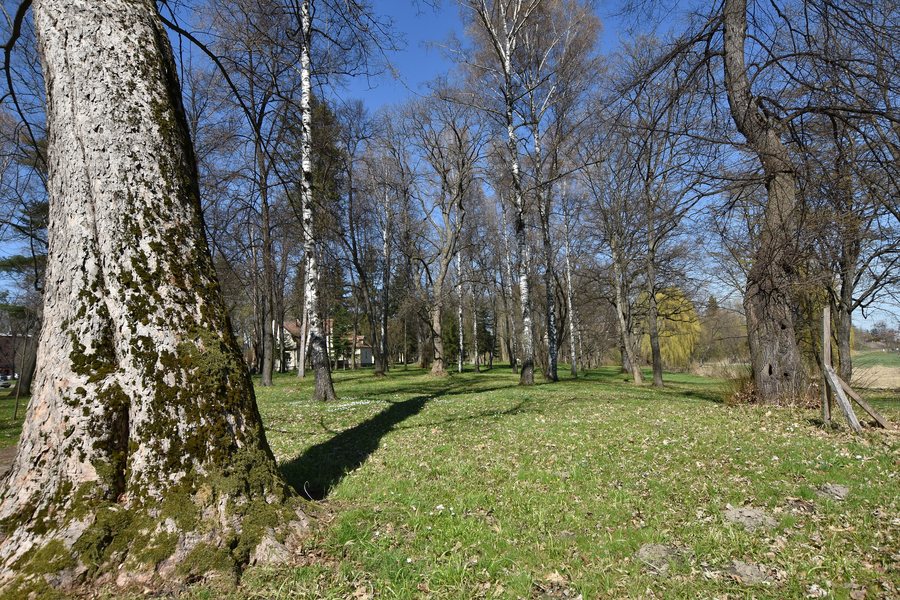
Hiking is also linked to a specific location: the Wojnicz–Panieńska Góra trail passes the park and palace complex in Wojnicz. When choosing what kind of outing interests you, this offers a different point of reference from the historical dates or the market square: the focus here is the route of the named trail. In this way, town history, urban space, art, and hiking can all contribute to your trip planning, without requiring you to explore every theme in the same way.
If you are deciding between cultural and historical interests and a stay that includes hiking, the information points to two different perspectives: historical dates and art on the one hand, and the named hiking trail on the other. You can first decide which of these perspectives will shape your trip to Wojnicz.
Discover more destinations: Tarnów, Siedliska, Ciezkowice, Tuchów, Wał-Ruda, Ryglice, Wierzchosławice, Paleśnica
Go to the main travel overview: Tarnów.

.jpg)