
Discover Dłużec: Churches and Historic Routes
Accommodation in Dłużec
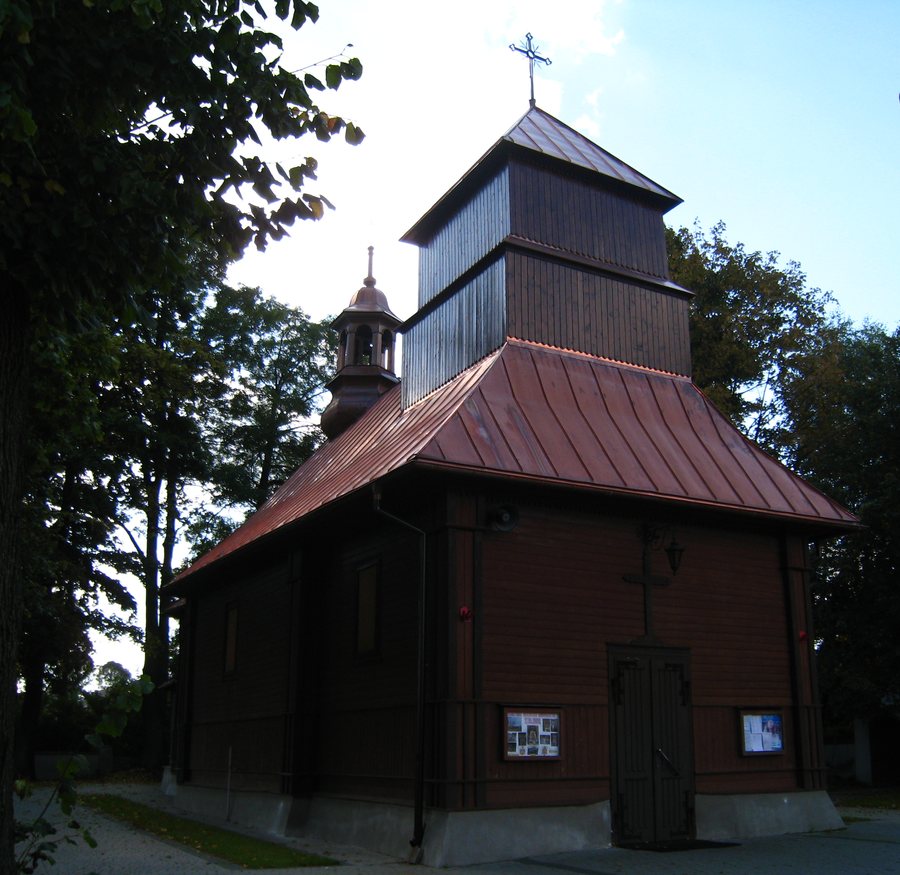
Dłużec can be explored through its churches, their history, and two different route connections. The blue Szlak Warowni Jurajskich passes through the village. The Szlak Architektury Drewnianej driving route also runs through Dłużec and includes the wooden Church of St. Lawrence and St. Nicholas. This offers several perspectives on the village: the course of a route and a specific historic building.
Routes with Different Focuses
If you include the blue Szlak Warowni Jurajskich in your travel plans, Dłużec is one of the places it passes through. Check the current conditions on the route before your trip. The Szlak Architektury Drewnianej driving route offers a different thematic connection: it also passes through Dłużec, but includes the wooden Church of St. Lawrence and St. Nicholas. The two routes thus offer different ways to explore: one focuses on the route through the village, while the other highlights wooden architecture. Which is more important for your plans depends on whether you want to focus on the route or the church building.
A Church with Several Building Phases
The parish church in Dłużec dates from 1780 and stands on the site of an older church, which was mentioned as early as 1325. Its construction history extends beyond these two dates: the tower was built as a free-standing bell tower in 1825. At the beginning of the 20th century, the nave was extended and connected to this tower. The building’s development can therefore be traced through several distinct stages: after the older church was mentioned came the construction of the church in 1780, the bell tower, and finally the structural connection between the nave and the tower.
The furnishings of the side altar in the Church of St. Nicholas and St. Lawrence also offer a separate historical point of reference. The altar is a triptych with a statue of the enthroned Virgin Mary dating from the last quarter of the 15th century. It also features late Gothic paintings and Gothic statues of saints. To understand the dating, it is helpful to distinguish between the different elements: the statue of the Virgin Mary is dated more precisely to the last quarter of the 15th century, while the paintings are described as late Gothic and the figures as Gothic.
The Chapel of St. Barbara at Lizak
About one kilometer farther toward Pilica, a square chapel dating from the 18th century stands at a place known as Lizak. It is located on a small rock among farm buildings, giving it a different setting from the parish church. Inside the chapel is a statue of St. Barbara from the beginning of the 17th century. The statue and the building therefore belong to different periods: the image was created at the beginning of the 17th century, while the chapel itself dates from the following century. This distinction in dates helps avoid confusing the two historical references.
Patronal Feasts and Village Life
The church calendar is also part of the local picture. The parish in Dłużec celebrates its patronal feasts on St. Nicholas Day, December 6, and the feast of St. Lawrence, August 10. Both dates are regular points of reference if you are interested in the parish’s patronal feasts. Another local institution is a branch of the Wolbrom Municipal Public Library. It is located in the spacious fire station in Dłużec. Together with the churches and the two routes, this gives a picture that encompasses historic buildings, recurring feast days, and institutions central to local life.
Discover More Destinations
Discover more destinations: Klucze, Zawada, Bukowno, Wolbrom, Golczowice, Olkusz, Osiek, Zabagnie.
Return to the main travel overview: Olkusz.

