
Discover Gronków
Accommodation in Gronków
Gronków can be understood through three distinct points of reference: the history of a church in the village, two named rocky outcrops just beyond it, and a scenic section of the Szlak wokół Tatr. Together, they offer different reasons to include the village in your travel plans. The key is whether you are most interested in a historical connection, distinctive names in the surrounding area, or the character of a route section. This distinction gives a more concrete picture of Gronków without conflating the three topics.
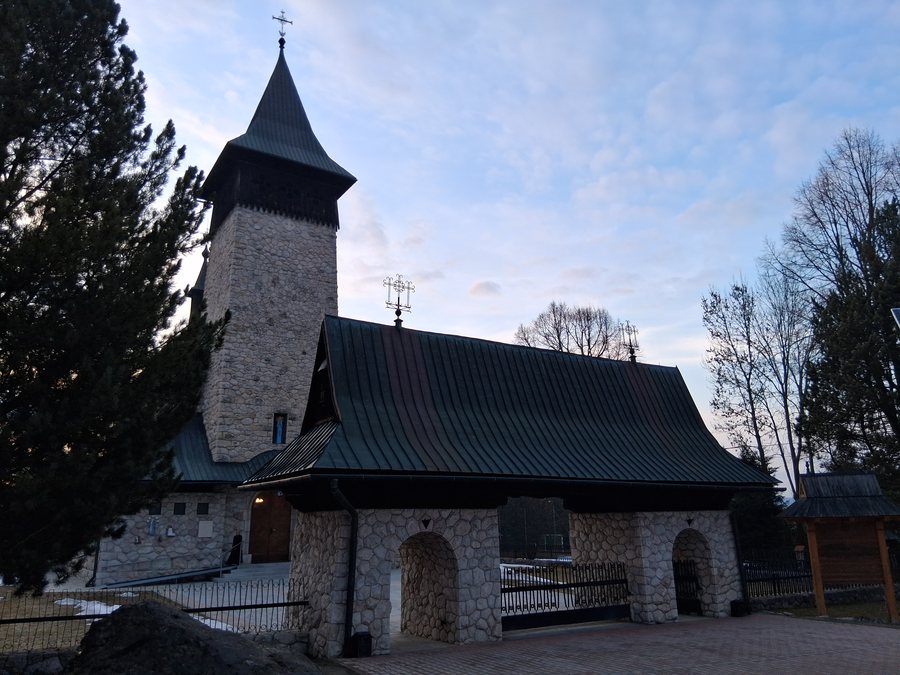
Church history in Gronków
The Church of the Immaculate Heart of Mary in Gronków was built in the 18th century as a filial chapel of the Szaflary parish. This connects two specific aspects of the village’s history: when it was built and its original ecclesiastical affiliation. For travelers who also look for a historical connection when choosing a destination, this offers a clear point of interest. Unlike the rocky outcrops and the route section, this connection relates to architectural and church history. Gronków can therefore be understood not only through its surroundings, but also through a named church with a specific historical function.
Rocky outcrops east of the village
Near Gronków, east of the village and just beyond its boundary, are the rocky outcrops Cisowa Skałka and Mała Skałka. Cisowa Skałka rises to 685 m above sea level; Mała Skałka is also known as Grzebieniowa. Their names distinguish two specific features of the landscape, rather than describing the area only in general terms. Their location also helps put them in context: the outcrops are outside the village, but close by. If the name Grzebieniowa comes up as you plan your trip, it refers to Mała Skałka. This lets you associate both names with a specific landscape feature and distinguish it from the village center.
A scenic route section
The section of the Szlak wokół Tatr between Gronków and Nowa Biała is scenic throughout. Alongside the individual rocky outcrops, it offers a different kind of landscape connection: a section linking two places. For your travel plans, this makes a clear distinction between named features in the nearby area and the character of a route section. You can consider whether, when choosing a destination, you are more interested in individual landscape features or a scenic stretch of route. Each of the three points of reference has its own focus: the church represents history, the rocky outcrops the nearby area, and the Szlak section a scenic route between two places.
Putting Gronków in context for your travel plans
When looking for a destination in Poland, these distinctions can help you identify your interests more precisely. The church offers a historical connection, while Cisowa Skałka and Mała Skałka are two named rocky outcrops east of the village. The Szlak wokół Tatr adds the scenic character of the section between Gronków and Nowa Biała to this picture. You can start by considering which of these points of interest matters most to your travel plans. They address different questions and can be considered separate reasons for your interest in Gronków.
Discover more destinations: Chyżne, Podwilk, Waksmund, Niedzica, Bańska Niżna, Ochotnica Górna, Rokiciny Podhalańskie, Ochotnica Dolna.
See the broader travel overview: Nowotarski.

