
Kikół – Palace Park and Church Art
Accommodation in Kikół
Kikół is a destination for travelers who want to get to know a place through its buildings, art, and landscaped surroundings. The palace and park ensemble, the church, and the Neoclassical palace offer different starting points for exploring architecture and history. This is about more than individual style labels: the buildings also reveal specific features such as a row of columns, a wooden ceiling, or a historic painting.
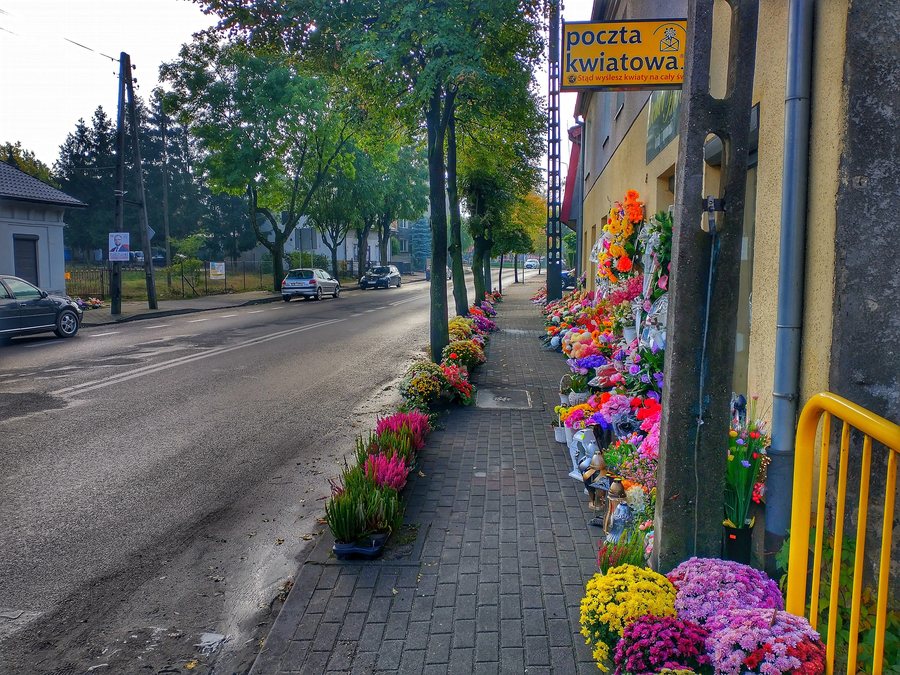 File:MOs810 WG 23 2023 Prusy Dolne (center of Kikół) (0).jpg
Photo: MOs810 via Wikimedia Commons, CC BY 4.0
File:MOs810 WG 23 2023 Prusy Dolne (center of Kikół) (0).jpg
Photo: MOs810 via Wikimedia Commons, CC BY 4.0
Palace and Park Ensemble in Kikół
The palace and park ensemble covers 13.5 hectares. This figure gives the ensemble a tangible sense of scale and draws attention to the park as well as the buildings. For trip planning, this offers a different way to explore Kikół than looking at individual works of art alone: the landscape and architecture together form one of the town’s distinctive themes. Those interested in historic estates will find a starting point here that differs from the details of the church and palace.
Neo-Gothic Church and Its Furnishings
The church is built of brick in the Neo-Gothic style and surrounded by a brick wall. It has two Neo-Gothic gates: a main gate and a cemetery gate. Form and material also shape the architectural impression of the church itself. The nave has a barrel-shaped wooden ceiling, and the main altar is also Neo-Gothic. The construction and furnishings are thus visibly connected in theme, even though the individual elements are not alike.
Other works of art introduce different points of interest. The right side altar holds a statue of Our Lady of Sorrows from Konotopie. The left side altar houses a painting of the Crucifixion signed by J. Paszkiewicz. There is also a Rococo baptismal font dating from the mid-18th century. Style, subject, and date bring together different art-historical references. Travelers who enjoy paying attention to details can use these varied features as a guide, rather than viewing the church only through its Neo-Gothic architecture.
Epitaph and Historic Tombs
An epitaph for Ignacy Antoni Zboiński, dating from 1796, is located at the church’s main entrance. The specific name and date make this memorial a distinct part of local history. The cemetery beside the church also contains several architecturally notable tombs from the late 19th and early 20th centuries. They add a later historical layer to the architectural and artistic history. Taken together, these details show how different historical themes can be traced through separate features of the church and its surroundings.
Neoclassical Palace
The palace in Kikół, dating from around 1790, offers another architectural perspective. Its deeply recessed portico, with a row of six columns, is a striking design feature. The walls of the Knights’ Hall retain illusionistic paintings of architectural motifs from the turn of the 18th and 19th centuries. These painted architectural features create a different effect from the columns of the portico: here, architecture is expressed not only through the building itself but also through painting. Compared with the Neo-Gothic church, the palace differs in both style and the architectural details described. This offers a helpful choice of themes when exploring Kikół: the park and ensemble, the church building and its furnishings, or Neoclassical palace architecture.
Discover more destinations
Discover more destinations: Będzeń, Popowo, Glewo, Skępe, Lipno, Wielgie, Polichnowo, Moczadła
For the main travel overview: Lipno.

_(0).jpg)