
Bzowo on the Steep Slope of the Vistula Valley
Accommodation in Bzowo
Bzowo lies on the steep slope of the Vistula Valley, a geographic setting that forms part of the village’s layered history. The late-Baroque Church of St. Margaret, the former settlements of Bzowo and Głowno, and wooden houses from the 19th century provide different historical points of reference. For travelers in Poland who consider architectural and settlement history alongside the landscape when choosing a destination, these features make Bzowo a tangible place to explore. The historical details range from a mention of the parish in 1325 to buildings and furnishings from later centuries.
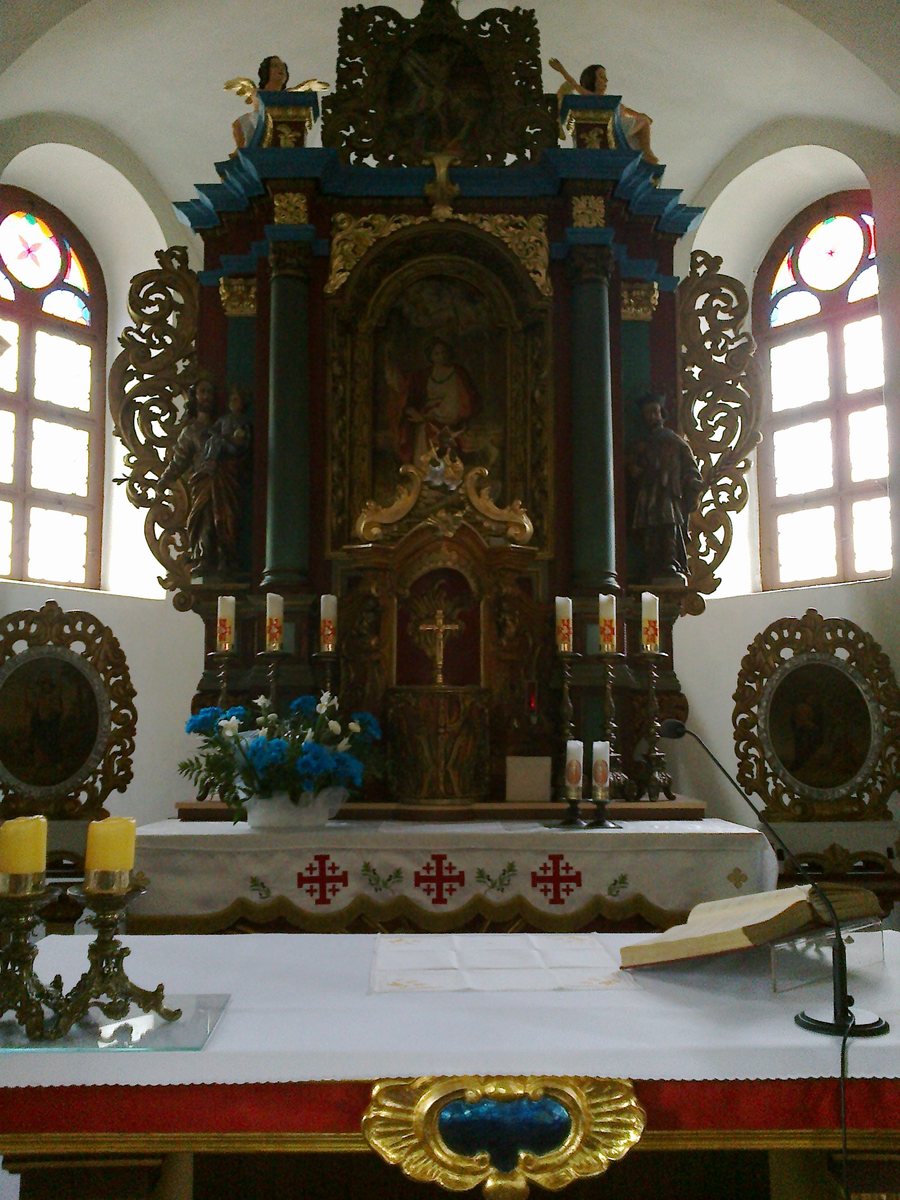 File:Widok na barokowy ołarz Kościoła parafialnego w Bzowie.jpg
Photo: Kacper z Bzowa via Wikimedia Commons, CC BY-SA 4.0
The Late-Baroque Church of St. Margaret
The present-day late-Baroque Church of St. Margaret was built and completed in 1768. It is made of brick and stone, has a tower, and features 18th-century Rococo interior furnishings. The style terms refer to different aspects of the building: late Baroque classifies the church, while Rococo describes its interior furnishings. On July 24, 1938, Bishop Konstanty Dominik consecrated the church. The 170 years between the construction and consecration dates make the consecration a later chapter in the church’s history, not an additional construction date.
Settlement History and the Cemetery
The relationship between Bzowo and Głowno is also part of the village’s history. Bzowo formerly consisted of these two settlements, which were joined in the 16th century. The first mentions of the parish in Głowno date back to 1325. These details mark different stages: 1325 refers to the parish, while the 16th century dates the former settlement structure. A cemetery was established at the Roman Catholic parish Church of St. Margaret at the beginning of the 18th century; a 14th-century cemetery is considered a possible predecessor.
Wooden Houses and a Former Horse Trough
The building history continued with wooden houses in Dutch, or Olęder, log construction dating from the mid-19th century. They were built about a century after the church of 1768, marking a later building phase. A former horse trough from the 19th century complements the houses and sacred buildings with an everyday feature. Its former purpose was to provide water for horses; alongside architectural styles and church dates, it offers a glimpse of a practical function.
Bzowo in Historical Context
The dates do not form a single, continuous building chronology, but rather mark different points of reference: 1325 concerns the parish, Bzowo and Głowno were joined in the 16th century, the cemetery and church date from the 18th century, and the wooden houses and trough belong to the 19th century. The 1938 consecration is a separate religious event. This makes it possible to distinguish between settlement development, architectural history, and religious history.
Landscape and Local History as Travel Interests
When choosing a destination, you can distinguish between three interests: the geographic location on the slope of the Vistula Valley, church history, and broader traces of everyday life in the past. The church and cemetery represent the religious context, while the wooden houses and horse trough illustrate other aspects of building and daily life. This can help you decide which way of exploring Bzowo matters most for your trip to Poland.
Discover more destinations: Rybno.
See the broader travel overview: Krzewiny.

