
Grzybowo: Hotels and Accommodation
The Gród w Grzybowie Archaeological Reserve is one of the largest fortified settlements built during the formation of the Piast state.
You can book a hotel in Grzybowo to suit your stay.
History and Sacred Architecture
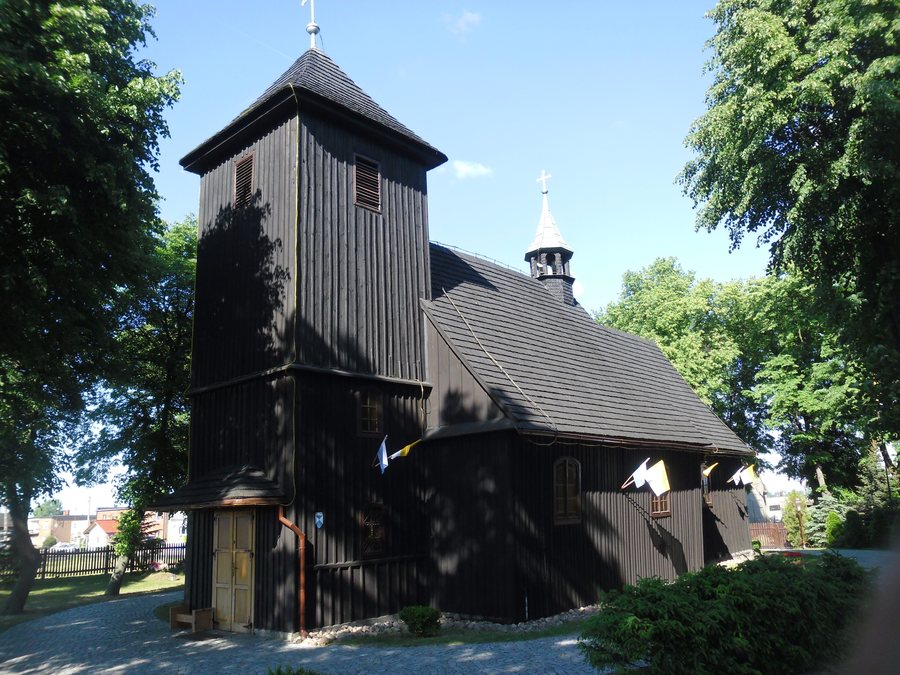
The origins of the fortified settlement in Grzybowo date back to the 920s and 930s. The Church of St. Michael the Archangel is an example of 18th-century sacred wooden architecture in Greater Poland. Its high altar contains a 19th-century painting of the Virgin and Child. A Baroque crucifix is located on a profiled triumphal arch beam in the church.
Archaeology and Paths
The ramparts and fortified settlement area of Grzybowo visible in the terrain cover 4.7 hectares. The preserved ramparts of the fortified settlement in Grzybowo now reach a height of up to 9 metres. The permanent exhibition “Knife” at the Grzybowo Archaeological Reserve presents knives from the Stone Age, Bronze Age and Iron Age.
The Piast Route leads from Gniezno to the early Piast fortified settlement in Grzybowo, then via Września and Nekla to the early Piast fortified settlement in Giecz. The Gród w Grzybowie Archaeological Reserve is a branch of the Museum of the First Piasts at Lednica. The museum building at the Archaeological Reserve, erected in 2009, imitates the former gate and part of the fortified settlement’s ramparts. The museum in Grzybowo officially opened in 2010. International Meetings of Slavic Warriors were held annually on the grounds of the fortified settlement in Grzybowo at the end of August.
Workshops and Classes
The “Jak grody budowano” workshop enables participants to build miniature models of Piast fortified settlements from clay, sticks and stones. The “U garncarza w zagrodzie” workshop teaches medieval pottery and enables participants to make their own clay vessels under guidance. In the “Igłą i rzemieniem” workshop, participants can make jewellery and small everyday objects inspired by the early Middle Ages from leather, felt and leather straps. The “Mój pierwszy wykop” museum lesson enables participants to carry out excavation work at a prepared archaeological dig and document the finds on find cards.
The “Grzybowski strzał w dziesiątkę” class teaches participants, under guidance, how to handle a bow and arrow and shoot at a target. The “Oręż wojownika” class combines a presentation of early medieval weapons with demonstrations and exercises using foam swords. The “Gry terenowe dla poszukiwaczy przygód” class uses the scenarios “Poszukiwacze Skarbu Grzybowskiego Grodu” and “Wędrówka z Historią”.
Landscape and Architectural Heritage
The manor house at Grzybowo 12 dates from the first half of the 19th century. The manor house complex at Grzybowo 12 includes a park dating from the late 19th century. The “Siemowit” English oak on the fortified settlement grounds is designated a natural monument, has a trunk circumference of 410 cm and is 28 m high. The fortified settlement lies on the edge of the floodplain of the Struga River.
Cycling Connection and Other Places
A cycle route connects Września and Grzybowo over a distance of 6.8 kilometres.
Other local destinations: Nekla, Wreschen, Miłosław, Lipie, Zasutowo, Bierzglinek, Węgierki.
Check prices, availability and amenities for your travel dates directly on Booking.com.
View Accommodation and OffersAdvertisement · Affiliate link to Booking.comBack to the main travel overview: Wreschen.

