
Czyżów Szlachecki: Late Gothic Church and Baroque Alterations
Accommodation in Czyżów Szlachecki
For travelers who take building history into account when choosing a destination in Poland, Czyżów Szlachecki offers a clear cultural focus. At its heart is the Church of All Saints and St. John of Nepomuk: a brick, single-nave Late Gothic building that was remodeled in the Baroque style in the early 18th century. There is also an 18th-century bell tower by the church. The history of the parish in Czyżów dates back to the late 14th or early 15th century. Several historical layers thus sit side by side without merging into a single building phase.
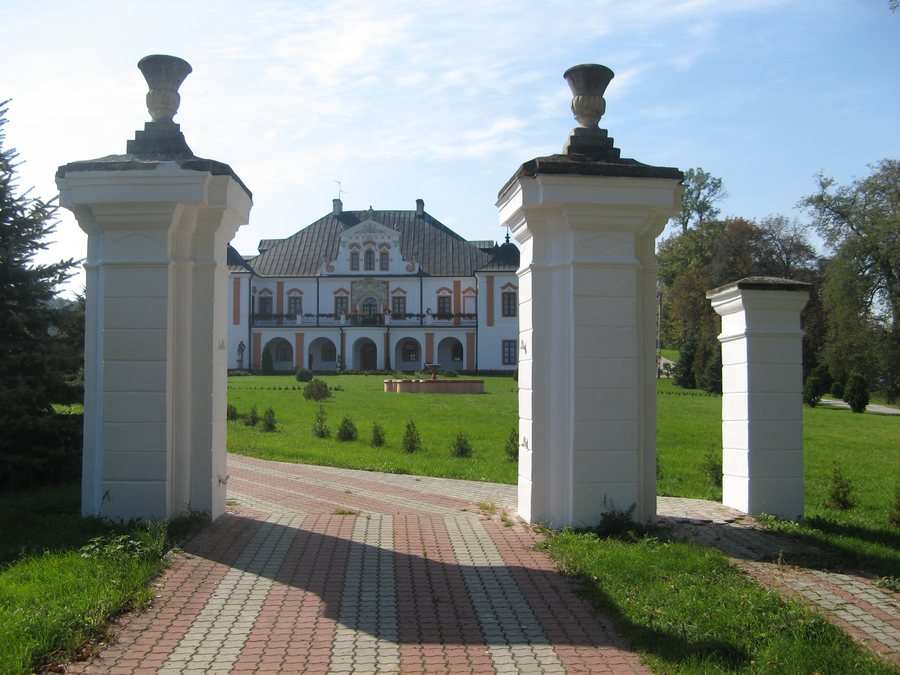
Late Gothic design and Baroque alterations
The church is designed as a single-nave building. The term describes a church interior with one main nave, rather than one divided into several parallel aisles. The description of the choir also offers a specific indication of the building’s form: it is narrower than the nave and has a flat end. Together with its brick construction and Late Gothic classification, this creates a distinctive architectural picture that goes beyond a mere date.
The remodeling in the Baroque style took place in the early 18th century. This makes it possible to distinguish two different periods in the church’s history: its Late Gothic design and later Baroque alterations. The parish’s long history goes back further, to the late 14th or early 15th century. The parish history, architectural design, and remodeling each mark distinct historical layers.
Church, former churchyard, and bell tower
The historic complex also includes a stone wall built around the church and the former churchyard in the 18th century. The former churchyard is therefore part of the site’s documented spatial history. The 18th-century bell tower adds another architectural element to the church site. The wall and tower date from the same century, but serve different roles in the description of the complex: the wall encloses the church and former churchyard, while the tower stands as a separate structure by the church.
As you piece together the history of the place, you can distinguish the former churchyard, its stone enclosure, and the church building. The timeline also becomes clearer when you do not conflate the founding of the parish with the later Baroque remodeling. These distinct points of reference give Czyżów Szlachecki its cultural focus: a parish history reaching far back in time, a Late Gothic church, and architectural elements from the 18th century.
A cultural point of reference when choosing a destination
If you choose places to visit in Poland based in part on their architectural history, the church in Czyżów Szlachecki offers a specific point of reference. You may be interested in its Late Gothic design, its Baroque remodeling, or the spatial connection between the church and the former churchyard. These aspects offer different ways to explore the history of the place without reducing it to a single period.
Czyżów Szlachecki can be defined by a clearly identifiable focus: religious architecture and its historical changes. If this theme fits your trip to Poland, you can then search for hotels in your preferred location.
Discover more destinations: Dwikozy, Sandomierz, Ocinek, Pielaszów, Klimontów, Samborzec, Kolonia Gałkowice, Koprzywnica.
For the broader travel overview: Sandomierz County.

