
Discover Kunów: Stonework and History
Accommodation in Kunów
Explore Kunów through its long stoneworking tradition, the history of the parish of St. Władysław, and two cycling routes that pass through the town. This gives you several ways to plan your visit: you can focus on history or take a closer look at cycling. Particularly characteristic is the connection between a locally rooted craft tradition and buildings made using stone from the area around Kunów.
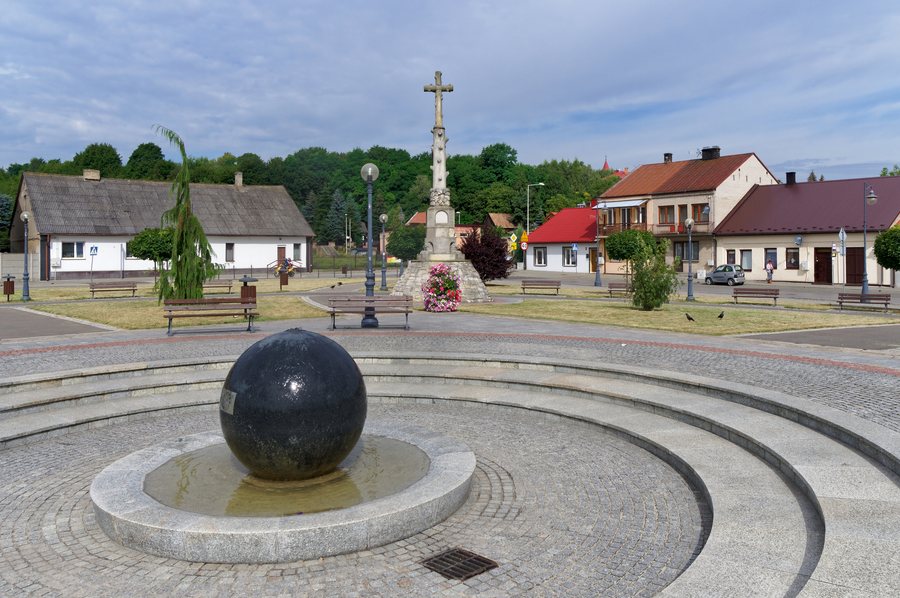
Stonework of regional significance
Kunów has been known nationwide as a center of stonework since the 16th century. This historical context describes the town’s craft tradition and helps you understand Kunów not only through individual buildings, but also through a craft that has been practiced there for a long time.
Stone from the area around Kunów was used, among other places, for the monastery on Święty Krzyż, the Łazienki Palace, and the Teatr Narodowy in Warsaw. This connection to the material extends the story beyond the town to buildings elsewhere. If you are interested in stonework, you can place Kunów’s local tradition in a broader regional context.
Church, bell tower, and cemetery
The first mentions of the parish of St. Władysław date from 1281. This date belongs to the history of the parish; it does not refer to the construction of the present-day church. The present-day St. Władysław Church in Kunów was built from 1625 to 1637 in the late Renaissance style. The early mention of the parish and the later-dated church building can therefore be viewed as distinct historical stages.
Next to the church stands a brick bell tower. It was built in 1896 to a design by the painter Wojciech Gerson. The tower thus has a much later date than the church. The construction date and the attribution of its design help distinguish the two structures in the town’s history.
The parish cemetery adjoining the church contains historic funerary sculptures. It is also the site of a grave for insurgents who fell in the 1863 Battle of Janik-Sadłowizna. The church, bell tower, and cemetery offer different historical perspectives: architectural history, funerary sculpture, and remembrance of a specifically named battle. If you plan your trip around cultural history, these provide several distinct themes to explore.
Kunów on two cycling routes
Two cycling routes pass through Kunów: “Śladami zabytków techniki doliny Kamiennej” and “Środkowe Dorzecze Kamiennej.” Their titles point to different themes: the first refers to industrial heritage in the Kamienna Valley, and the second to the middle Kamienna Basin. When planning your trip, you can start by considering which of these themes interests you more. Check local conditions before setting out on a ride.
The cycling routes offer a different perspective from the history of the parish, church, and cemetery. You can decide whether to include Kunów in your trip to Poland mainly for its history or for a cycling route. Stonework tradition, church architecture, and cycling are separate points of interest that you can consider depending on the focus of your trip.
Discover more destinations: Ostrowiec Świętokrzyski, Bałtów, Waśniów, Antoniów.
Return to the broader travel overview: Ostrowiec.

