
Krasnystaw: Hop Festival, City History and Distinctive Local Details
Accommodation in Krasnystaw
Krasnystaw can be explored through three distinct threads: the history of the Chmielaki festival, an exhibition on the city's history, and a specially named tree in the town square. Together, they lead from the local hop-growing tradition through historical milestones to a distinctive feature of public space. This gives your trip planning a clear focus on culture and local history.
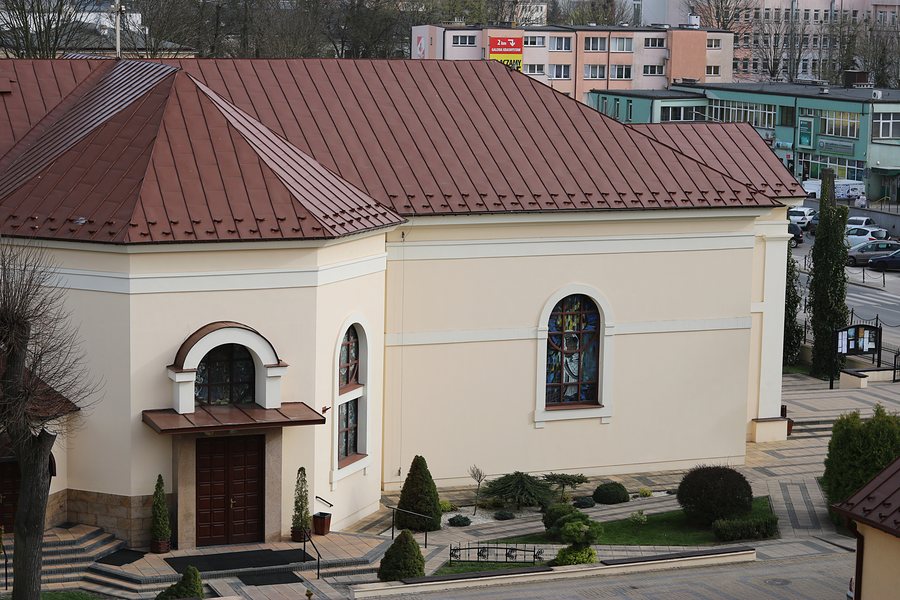 Krasnystaw, Kościół Trójcy Przenajświętszej w Krasnymstawie
Photo: Micewiczmartyna via Source, CC BY-SA 4.0
Chmielaki: two historical dates
The Chmielaki Krasnostawskie began in September 1971 as a local hop harvest festival. In the wider destination of Krasnystaw, the hop and brewing festival has been held for several decades; the name Chmielaki Krasnostawskie is still used. Since 1977, its official name has been “Ogólnopolskie Święto Chmielarzy i Piwowarów Chmielaki Krasnostawskie.” The years refer to two different steps: 1971 marks the beginning of the local harvest festival, and 1977 the official form of the name. This topic is therefore about both the festival's origins and the development of its name. If you are interested in local traditions and their historical context, this is a concrete starting point for exploring Krasnystaw. If you plan your trip around the festival, check the specific event dates in advance.
City history from town rights to 1989
The exhibition at Muzeum Regionalne w Krasnymstawie offers a different timescale. It presents the city's history from 1394 to 1989. An early milestone is the granting of Magdeburg town rights to Szczekarzów, with 1989 marking the other end of the period. This timespan sets the exhibition apart from the history of the festival: its focus is a broad sweep of the city's history, not just the origins of a tradition. The two dates make the timeframe clear. If you are interested in historical developments and their points of reference, the exhibition offers a clearly defined topic that you can explore alongside the local hop-growing tradition.
A named tree in the town square
A distinctive local landmark is the field maple in Krasnystaw's town square. It is called “klęczące drzewo,” meaning “kneeling tree.” Unlike the exhibition's dates, this name does not point to a chronological milestone, but to the distinctive name of a particular tree. This detail complements the historical topics with a local reference to nature and offers a different way to discover the town. The Polish name preserves the local expression, while the English explanation conveys its vivid meaning. Krasnystaw is therefore notable not only for events and periods of time, but also for a single named feature of public space.
More topics in the wider destination of Krasnystaw
The wider destination of Krasnystaw offers another historical thread: the Church of St. Francis Xavier in the Jesuit complex in Krasnystaw served as a cathedral from 1773 to 1826. Its clearly defined period of use provides a different emphasis from the city exhibition, whose period runs from 1394 to 1989. The wider destination is also home to Stadnina Koni w Białce, a breeding center for purebred Arabian horses and a venue for equestrian sports. This means that, alongside city history and the hop-growing tradition, horse breeding and equestrian sports are also topics to explore. They differ both from the exhibition's historical focus and from the local festival theme.
Which focus suits your trip?
If you would like to start with the city's history, you can consider the exhibition and the cathedral's historical role as two different points of reference. The history of Chmielaki Krasnostawskie leads to the hop-growing tradition, while the equestrian theme offers a different emphasis in the wider destination. The “kneeling tree” adds a specific connection to nature to these topics. This allows you to shape your further travel plans around whichever of these historical, cultural or thematic threads you would like to explore in more depth.
Discover more destinations: Czysta Dębina, Ostrzyca, Tarnogóra, Olchowiec, Izbica, Tarnogóra-Kolonia.
Back to the wider travel overview: Krasnystaw.

